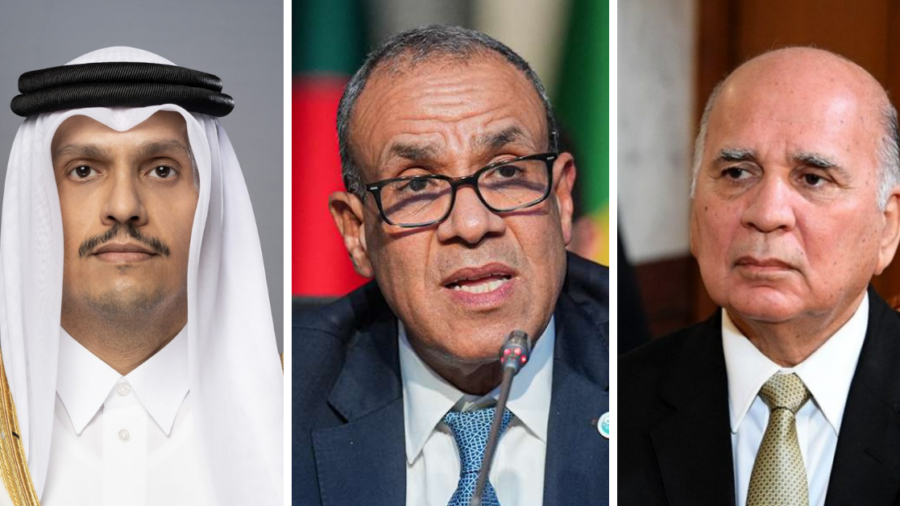
Egyptian Foreign Minister Badr Abdelatty conducted high-level discussions with counterparts from Qatar and Iraq on Tuesday to advocate for de-escalation across the Middle East. The diplomatic efforts aim to prevent a broader military confrontation through increased coordination and the prioritization of negotiations.
Tuesday, October 22
Abdelatty held a telephone conversation with Qatari Prime Minister and Foreign Minister Sheikh Mohammed bin Abdulrahman Al Thani. According to foreign ministry spokesperson Ambassador Nader Zaki, both officials agreed to coordinate with relevant parties to secure time for negotiations. They emphasized the necessity of consulting international partners to restore security and avoid further deterioration in the region.
Tuesday, October 22 (Continued)
In a separate call with Iraqi Deputy Prime Minister and Foreign Minister Fuad Hussein, Abdelatty discussed the potential consequences of further military action. He urged that space be provided for diplomatic channels to resolve ongoing crises. The ministers also reviewed the outcomes of Abdelatty’s visit to Baghdad, which occurred on October 17 and 18, and discussed preparations for the fourth session of the Egyptian-Iraqi Supreme Joint Committee. Abdelatty stated his intent to bolster economic, trade, and investment ties between the two nations.
Current Status
Egypt remains committed to working with regional partners to maintain stability and protect the freedom of navigation in international maritime corridors. The focus remains on expanding the role of Egyptian firms in Iraq’s reconstruction projects while simultaneously containing current regional military tensions.
Why it matters: Regional stability remains a primary concern for Egypt, which is actively attempting to mediate conflicts to protect its economic interests and the safety of critical maritime routes. By coordinating with Qatar and Iraq, Cairo is seeking to contain security risks that could impact regional trade and development.