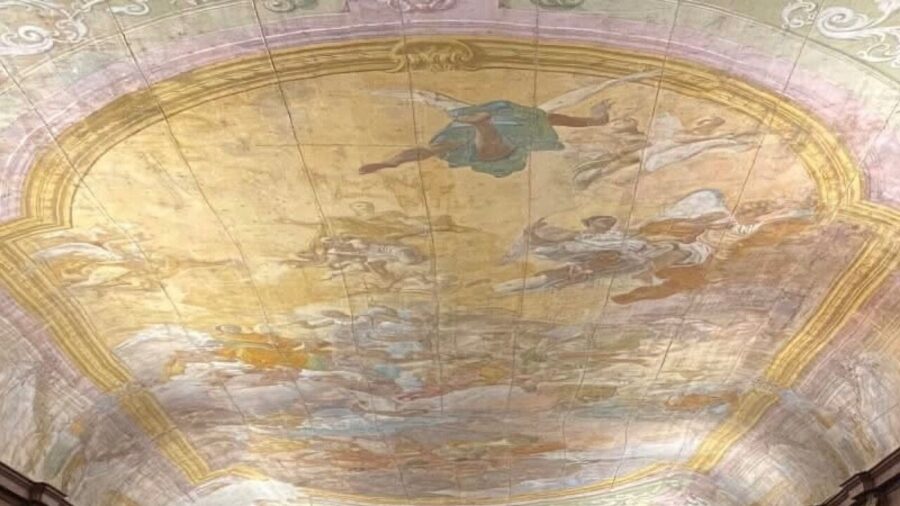
Visitors to the library at the Certosa di San Lorenzo in Padula, Italy, are now required to remove their shoes before entering. The new policy mandates that guests wear only socks to protect the site’s historic majolica-tiled floor.
The Certosa di San Lorenzo is a UNESCO World Heritage site and one of the largest monasteries in Italy. Management implemented the rule to preserve the integrity of the flooring, which dates back to the 18th century. The library, known for its intricate tile work, attracts tourists from around the world.
Preservation Efforts
The monastery complex, located in the province of Salerno, serves as a significant example of Baroque architecture. Officials stated that foot traffic poses a risk to the delicate ceramic surfaces. The requirement is part of a broader conservation strategy to maintain the structure’s physical condition.
The library features a collection of rare books and manuscripts housed within a room designed to showcase the artistic heritage of the Carthusian order. The majolica tiles, characterized by their vivid patterns, are considered a highlight of the interior design. By requiring visitors to walk in socks, administrators aim to reduce friction and potential damage caused by hard-soled footwear.
Ongoing Management
The Certosa di San Lorenzo remains open to the public, though access to specific areas may be restricted based on maintenance needs. Staff will enforce the new footwear policy at the library entrance. Future preservation projects at the site will continue to focus on stabilizing the 18th-century architecture against the impact of increased tourism.
Why it matters: This measure highlights the ongoing challenge of balancing public access to historical sites with the necessity of preservation. For global heritage sites, particularly in regions with significant ancient architecture like the Middle East and Egypt, managing visitor impact on fragile flooring and infrastructure remains a critical priority for cultural authorities.