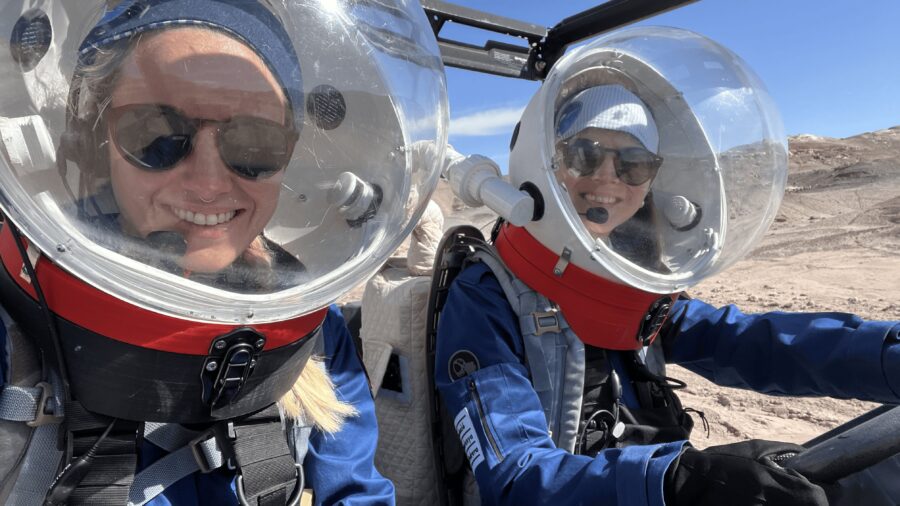
An all-female Spanish crew completed a two-week mission in 2023 at a research station in the Utah desert to simulate living and working conditions on Mars. The project, known as Hypatia I, required the participants to manage limited resources, conduct scientific research, and navigate the challenges of living in a confined space.
The mission aimed to replicate the isolation and logistical difficulties of space travel. Crew members were tasked with solving technical problems and maintaining operational protocols while separated from Earth’s standard environment. The project served as both a scientific exercise and a demonstration of collaborative capability in extreme conditions.
Promoting Gender Representation in Aerospace
Beyond the technical objectives, Hypatia I was designed to highlight the role of women in space exploration. The crew members emphasized the importance of visibility for future generations, particularly young girls considering careers in science and engineering.
Cesca Cufí, an aerospace engineer and crew participant, stated that the mission included outreach efforts such as public talks. Cufí noted that providing accessible role models helps children visualize themselves in similar scientific careers, reinforcing the idea that gender is not a barrier to space exploration.
Operational Logistics and Future Research
The simulation required the crew to function as a self-sustaining unit. By operating in a remote desert environment, the researchers tested their ability to handle the psychological and physical demands of long-term space habitation. The data gathered during these two weeks is intended to contribute to broader studies regarding human life support systems and crew dynamics in extraterrestrial environments.
Why it matters: This mission highlights the growing trend of using terrestrial analog environments to prepare for future interplanetary travel. By focusing on gender diversity within these simulations, Hypatia I addresses the need to expand the pipeline of qualified scientists and engineers available for upcoming space exploration initiatives.