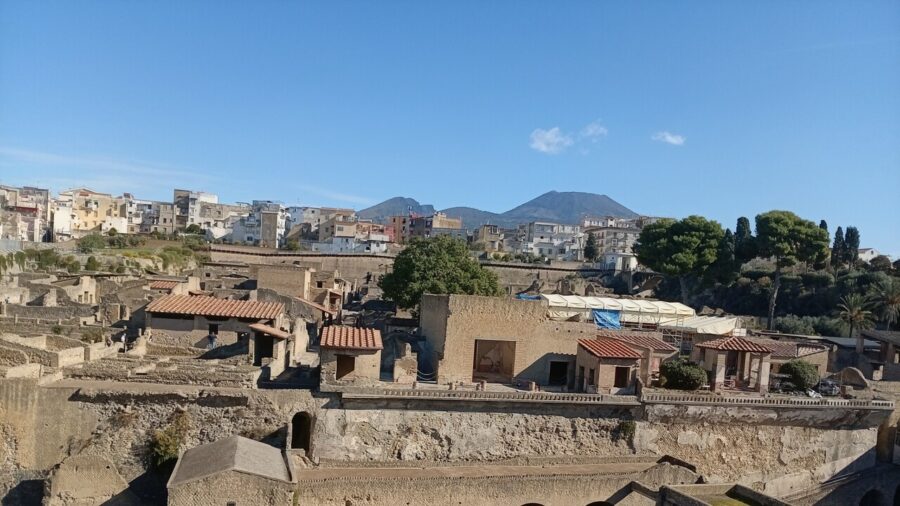
The Herculaneum Archaeological Park in Italy has reopened two ancient residences to the public after they remained closed for decades. The Casa dell’Atrio a Mosaico and the Casa a Graticcio are now accessible to visitors following extensive maintenance and restoration work.
Restoration and Access
Park officials confirmed that the two domus have been integrated into the regular visitor route. The Casa dell’Atrio a Mosaico, known for its intricate flooring, and the Casa a Graticcio, which features a distinctive construction style, were previously restricted due to long-term preservation requirements.
Conservation efforts focused on stabilizing the structures and cleaning the architectural features within both homes. These sites provide insight into the residential architecture of the Roman city, which was buried during the eruption of Mount Vesuvius in 79 AD.
Site History
Herculaneum is smaller than the neighboring site of Pompeii but contains well-preserved organic materials, including wood and carbonized food, due to the specific conditions of the volcanic burial. The park management continues to rotate access to various domus to balance tourism with necessary conservation protocols.
Why it matters: The reopening of these sites increases the available inventory of historical structures for researchers and tourists. Expanding public access to these well-preserved examples of Roman domestic life allows for a deeper understanding of ancient urban planning and daily existence, contributing to the ongoing study and preservation of the UNESCO World Heritage site.