A business manager seeking last year’s sales figures typically runs a single report, retrieving the necessary data in one lookup. However, when an AI agent is asked to analyze why sales dropped over three quarters, the process shifts dramatically. The agent must pull order records from ERP and CRM systems, scan support tickets, check customer chats, and read sales reports. If the reasoning is incomplete, the agent must repeat the process, performing hundreds of lookups to answer a single query.
The Data Infrastructure Challenge
Nitin Waghulde, Regional Director for APAC at VeloDB, says this operational gap is why many artificial intelligence projects fail to transition from pilot to production. Gartner projects that more than 40% of agentic AI projects will be canceled by the end of 2027 due to rising costs, unclear business value, or insufficient risk controls. Waghulde argues that the root cause often lies in the data layer rather than the AI model itself.
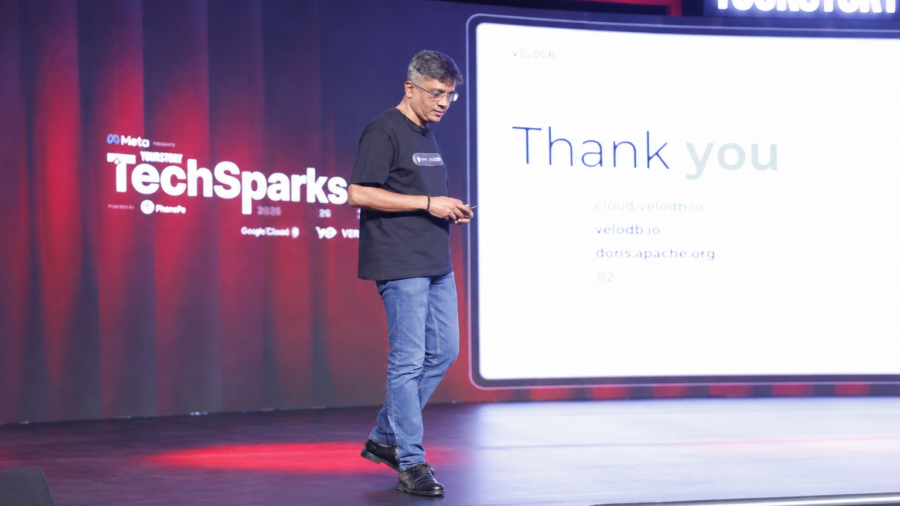
During a keynote address titled “AI agents at scale: Surviving beyond the demo,” Waghulde explained that AI agents function differently than human employees. While traditional systems were designed for human consumption through fixed reports, AI agents operate iteratively. They work around the clock, ask multiple unscripted questions simultaneously, and continuously loop between thinking, searching, and retrying. This behavior places unpredictable strain on data infrastructure.
Requirements for Production Success
Waghulde identified four essential requirements for scaling AI agents effectively. First, agents require access to diverse data types, ranging from structured transactional records to unstructured documents. Second, the system must handle massive scale, as a single query may require scanning petabytes of data. Third, the data must remain current; Waghulde compared using stale data to driving with an inaccurate traffic map. Finally, companies must ensure data provenance so that the source of an AI’s answer can be verified, addressing critical trust issues.