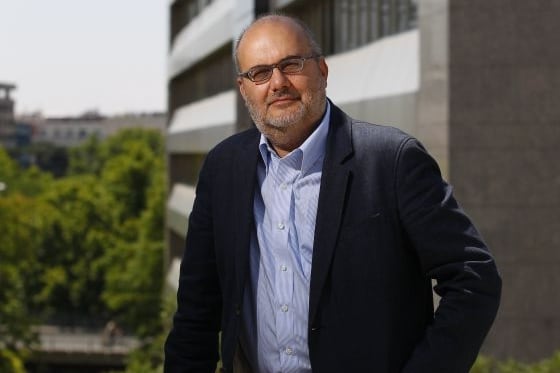
Branko Milanovic, a leading expert on global inequality and a former World Bank senior economist, argues that social science students must engage directly with urban environments rather than studying in isolated university campuses. Milanovic, who currently teaches at the City University of New York (CUNY), maintains that daily exposure to city life is essential for understanding economic realities.
The 73-year-old Serbian-American scholar advocates for proximity to urban centers, suggesting that students benefit from navigating public transportation and observing daily interactions. He contends that academic study in the social sciences, particularly economics, requires grounding in the complexities of city life to remain relevant.
The Intersection of Academia and Urban Life
Milanovic’s perspective is reflected in his own professional practice. His office is located on Fifth Avenue in Manhattan, placing him in the center of New York City’s economic activity. He suggests this environment provides more insight into macroeconomic principles than a rural or secluded campus setting.
During his two-decade tenure at the World Bank, Milanovic established himself as a prominent voice in inequality research. He continues to apply this experience to his current teaching role, emphasizing the necessity of maintaining a connection between theoretical research and the practical, lived experiences of the broader population.
Why it matters: This perspective highlights a recurring debate in higher education regarding the efficacy of ivory-tower academic models versus practical, experiential learning. For students and institutions in rapidly urbanizing regions, such as those in the Middle East and Egypt, Milanovic’s endorsement of urban-centered education underscores the potential value of integrating academic research directly into the socioeconomic hubs where policy impacts are most visible.