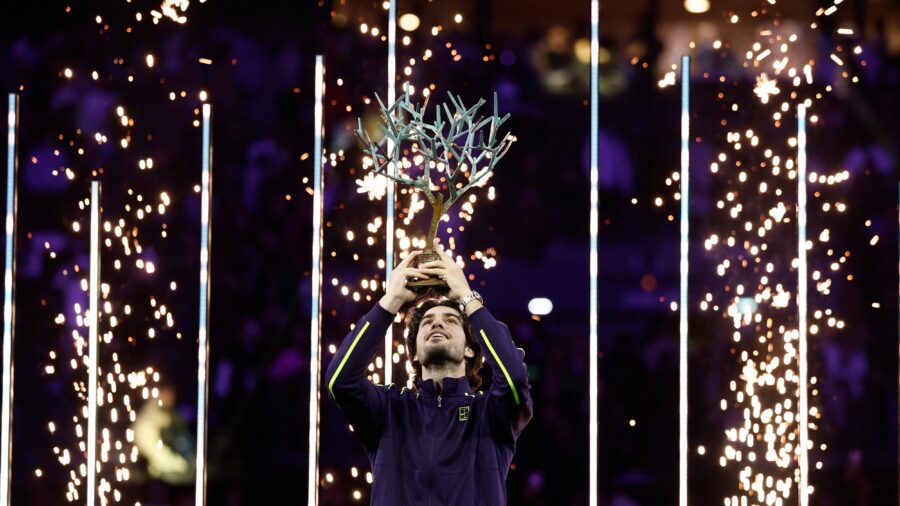
Carlos Alcaraz has successfully transitioned to indoor hard court tennis, a surface that previously challenged his playing style. The Spanish player recently secured his tenth consecutive victory across the Vienna ATP 500 and Paris Masters 1000 events, marking a significant shift in his career trajectory.
For years, Alcaraz struggled to adapt to indoor conditions, where the ball travels faster and bounces differently than on clay or outdoor hard courts. He previously stated that mastering these environments was a matter of time. His recent performance indicates that he has adapted his game, particularly his serve and his ability to handle rapid exchanges.
Tactical Adjustments and Performance
In his recent match against Ben Shelton, Alcaraz emphasized the importance of his reaction to his opponent’s initial shots. Shelton, known for a powerful serve, forces opponents into constant movement. Shelton noted after the match that Alcaraz’s footwork and anticipation created consistent pressure, making it difficult for the American to maintain accuracy on his first serve.
Statistical analysis from the match supports this assessment. Alcaraz outperformed Shelton in key serving metrics, landing 72% of his first serves compared to Shelton’s 65%. The Spaniard also secured more points on both first and second serves and maintained a higher success rate at the net, winning 77% of those points.
Career Milestones
This victory adds 1,000 points to Alcaraz’s total, though he remains third in the ATP rankings behind Alexander Zverev and Jannik Sinner. With this win, Alcaraz earned 975,000 euros and became the only player to win at least one Masters 1000 tournament in each of the last five years. Since the inception of the ATP rankings in 1973, Alcaraz holds a 69.4% win rate against top-10 opponents, trailing only Björn Borg.
Why it matters: As the ATP tour continues, Alcaraz’s improved adaptability on indoor courts suggests he will remain a primary contender in upcoming tournaments. His ability to compete consistently against top-ranked players on varied surfaces highlights the evolving competitive landscape of professional tennis.