Economic Policy Directives
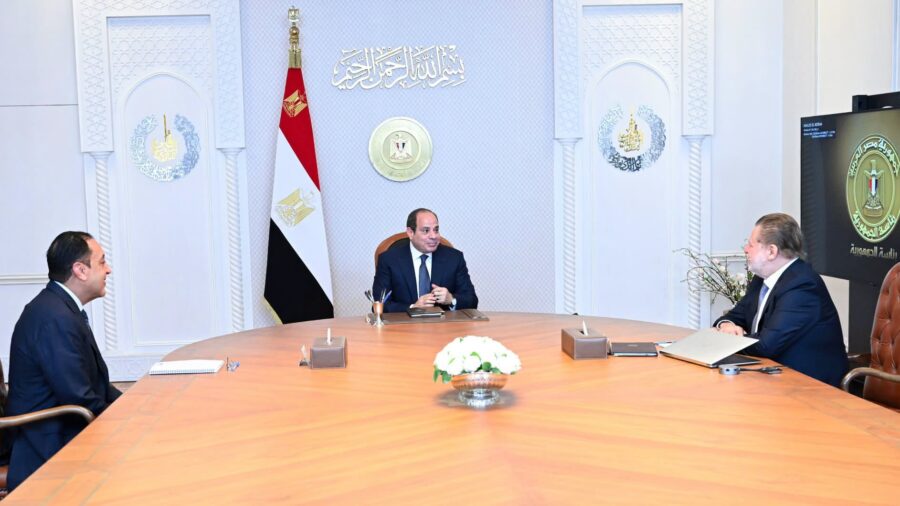
President Abdel Fattah Al-Sisi met with top economic officials on Monday to set new benchmarks for Egypt’s financial recovery. During separate sessions with Prime Minister Mostafa Madbouly, Central Bank Governor Hassan Abdalla, and Finance Minister Ahmed Kouchouk, the president emphasized the need to curb inflation and lower public debt.
Central Bank Governor Hassan Abdalla reported that foreign exchange reserves reached a record $57.50 billion by the end of October 2026. He stated that net foreign assets in the banking sector have risen to their highest levels since 2011, though specific figures were not released by the presidency. Abdalla affirmed that the central bank will maintain a flexible exchange-rate regime driven by market mechanisms while focusing on financial stability.
Al-Sisi directed officials to ensure sufficient foreign currency reserves to cover the country’s strategic import needs. Discussions also touched on digital transformation, with the president calling for strengthened cybersecurity, improved governance, and better risk-management frameworks within the banking sector to support digital financial services.
Fiscal Reform and Investment Strategies
In his meeting with Finance Minister Ahmed Kouchouk, the president reviewed government plans to stimulate growth and bolster social protection programs. Kouchouk outlined a strategy involving tax, customs, and real estate incentives designed to attract private-sector investment. The government is also exploring debt-for-investment and debt-for-asset swaps to manage financing costs and diversify instruments.
The Finance Ministry is currently evaluating a study on investing surpluses from state entities into government securities. Kouchouk noted that this measure aims to decrease the state budget’s reliance on costly domestic and external borrowing. He added that maintaining fiscal surpluses remains central to reducing the overall budget deficit and freeing up resources for health and education.