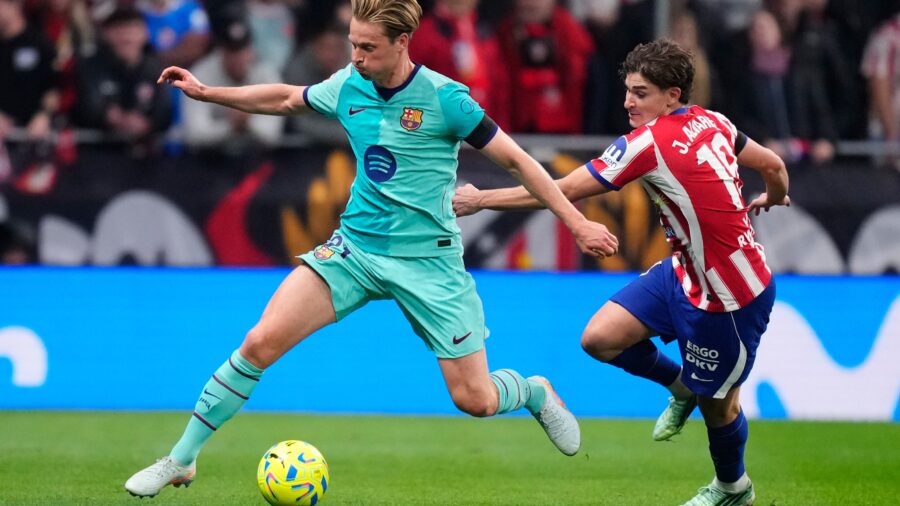
Frenkie de Jong helped Barcelona overturn a deficit against Atletico Madrid on Sunday at the Metropolitano, playing both as a right‑back and a midfielder.
The Dutch midfielder first covered the right flank before moving into central midfield, a shift that altered Barcelona’s attacking shape and contributed to the team’s resurgence.
Barcelona had trailed early in the match, but De Jong’s positional flexibility allowed the side to regain control and create scoring opportunities. His performance was highlighted as a key factor in the comeback, demonstrating his ability to influence the game from multiple positions.
Match impact
De Jong’s movement between defense and midfield disrupted Atletico’s defensive organization, opening space for Barcelona’s forwards. Analysts noted that his tactical adaptability gave the Catalan side a tactical edge in the latter stages of the game.
The victory marked an important result for Barcelona as they seek to improve their league standing. It also underscored De Jong’s growing importance within the squad, as he continues to be deployed in various roles by the coaching staff.
Background
Since joining Barcelona, De Jong has been praised for his technical skills and football intelligence. While he has often been positioned in midfield, his recent deployment on the right side of defense reflects the club’s willingness to experiment with his versatility.
Barcelona’s recent form has been inconsistent, prompting the manager to explore different tactical setups. De Jong’s performance against Atletico illustrates how such adjustments can produce immediate results.
Why it matters: The Dutchman’s ability to switch positions and affect the outcome of a high‑profile match highlights Barcelona’s tactical options as they chase European competition spots, a development closely watched by fans across the Middle East and Egypt.