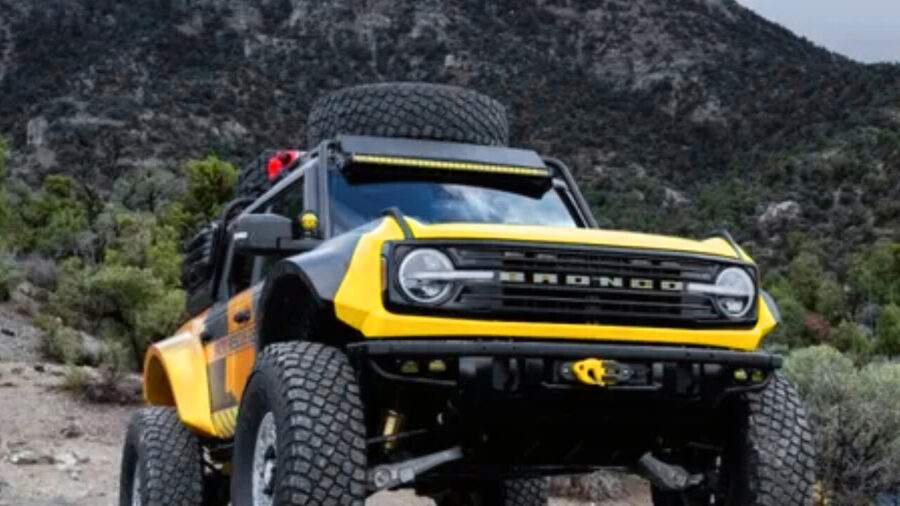
Ford has introduced the Bronco Frostwarden, a concept vehicle engineered for specialized rescue operations. The rugged SUV features a high-performance powertrain designed to handle extreme environments.
Engine Capabilities
At the center of the Frostwarden is Ford’s 7.3-liter Megazilla 2.0 crate engine. The manufacturer equipped this V8 powerplant with a large volumetric supercharger to increase output. According to technical specifications provided by the automaker, the engine generates 1,200 horsepower.
The concept is designed to operate in challenging rescue scenarios where power and durability are critical. The integration of the Megazilla 2.0 engine into the Bronco platform suggests a focus on off-road capability and rapid response times in difficult terrain.
Development and Future Outlook
The Frostwarden serves as a display of Ford’s current crate engine technology. By pairing the heavy-duty V8 with the Bronco chassis, the company aims to demonstrate how existing parts can be adapted for utility-focused applications. While the Frostwarden remains a concept, the project highlights ongoing testing of high-output engines in various vehicle architectures.
Ford has not announced plans to put the Frostwarden into mass production. Instead, the vehicle functions as a testbed for evaluating the performance of the Megazilla 2.0 engine under demanding conditions. Future iterations of Ford’s rescue-oriented vehicles may incorporate data gathered from this concept.
Why it matters: The Bronco Frostwarden showcases the practical application of high-performance crate engines in specialized rescue vehicles. For automotive markets in the Middle East, where off-road capability is a primary consumer demand, this concept demonstrates how manufacturers are prioritizing engine power and durability for extreme environmental conditions.