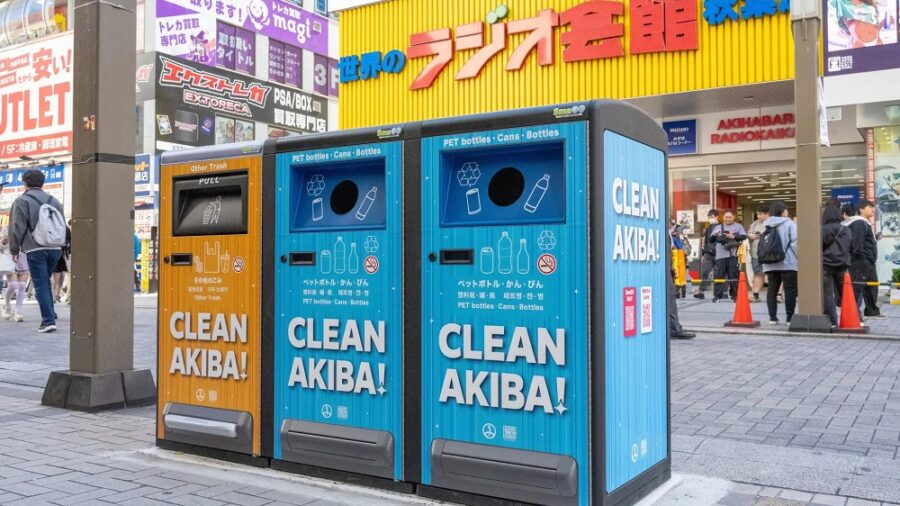
Chiyoda Ward officials in Tokyo have installed 22 smart trash compactors in the Akihabara district to address rising litter levels caused by increased tourism. The initiative aims to modernize waste management in one of the city’s most popular shopping and entertainment hubs.
January
Local authorities observed significant accumulations of litter on sidewalks within the Akihabara neighborhood. This trend highlighted a growing issue with waste disposal in areas experiencing high volumes of international visitors.
Recent Implementation
Chiyoda Ward utilized funding from the Tokyo Green Up Action subsidy program to acquire 22 SmaGO units from the local technology firm Forcetec. These solar-powered receptacles compress waste to one-fifth of its original volume. The bins are connected to a cloud network, allowing maintenance crews to monitor capacity remotely and optimize collection schedules.
Current Deployment
The units are currently operational at 10 locations clustered around Akihabara Station and along the major shopping thoroughfare, Chuo-dori. This deployment aligns with broader municipal efforts, including recent ordinances in the Shibuya district that mandate increased public trash access and stricter penalties for littering.
Status of Waste Management Initiatives
The introduction of smart bins reflects a shift in Tokyo’s approach to public sanitation as tourist traffic grows. While traditional Japanese etiquette emphasizes carrying waste home, municipal governments are increasingly installing infrastructure to accommodate visitors and maintain urban cleanliness. Why it matters: This transition highlights the challenges major tourist destinations face in balancing traditional cultural norms with the logistical demands of modern mass tourism. For cities worldwide, including those in the Middle East seeing rapid tourism growth, the deployment of IoT-enabled infrastructure offers a scalable model for managing sanitation in high-density public spaces.