Access to advanced artificial intelligence models is becoming commoditized, prompting businesses to seek competitive advantages elsewhere. Industry leaders argue that proprietary enterprise data, rather than the AI model itself, will determine long-term success.
TechSparks 2026 Session
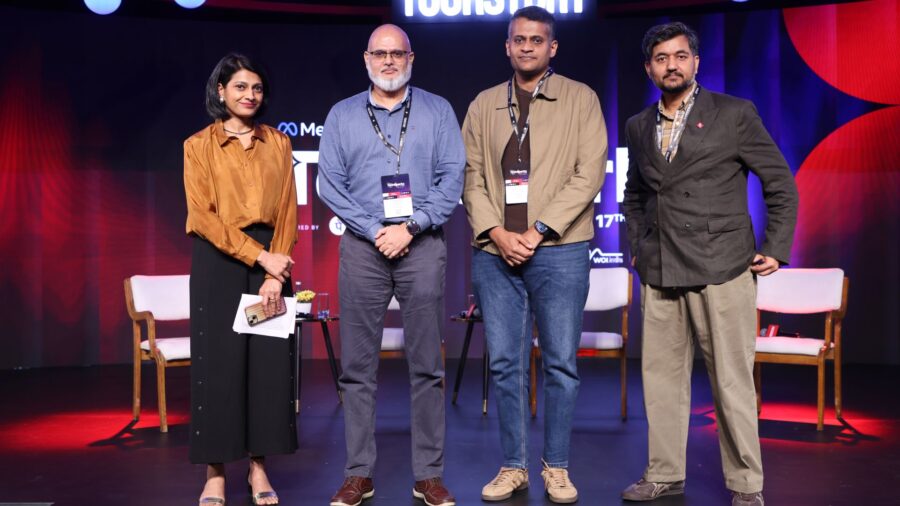
At the 2026 TechSparks event, executives from MongoDB, Pine Labs, and Spinny gathered to discuss how companies can build sustainable AI systems. Panelists Divakaran Ullampuzha Mana, Vijeth Pandit, and Karan Kumar emphasized that while AI capabilities are increasingly interchangeable, the value lies in how organizations integrate their unique internal data.
The Role of Data Context
Divakaran Ullampuzha Mana of MongoDB stated that open-source models are rapidly matching the performance of frontier models. He argued that a company’s true asset is its ability to access and utilize structured and unstructured enterprise data to generate actionable insights. Vijeth Pandit of Pine Labs added that data history and merchant interactions provide a level of product relevance that isolated models cannot achieve.
Transitioning from Prototype to Production
Mana noted that while creating AI demos is relatively simple, scaling these systems for thousands of users requires a robust infrastructure. Successful companies prioritize a secure, governed data foundation before implementing evaluation frameworks and runtime engines. This approach allows organizations to move beyond pilot programs and deploy functional applications at scale.
Establishing AI Guardrails
Pandit explained that Pine Labs manages AI agents similarly to human employees by implementing strict protocols. The company utilizes the Grantex and P3P frameworks to define agent boundaries and transaction authority. These systems ensure that AI agents operate safely while executing tasks, such as purchasing items only when specific price thresholds are met.