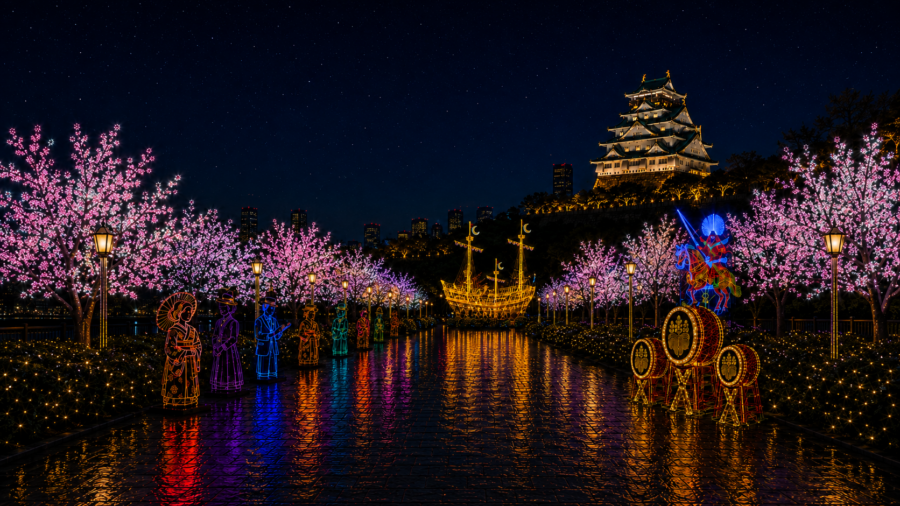
Visitors to Osaka Castle will see the Nishinomaru Garden transformed this winter through a historical light installation. The event, titled “Unification of the Realm, Shogun – A Story in Light,” runs from November 20 to February 14.
A Historical Backdrop
The display uses the grounds of Osaka Castle, the site where warlord Toyotomi Hideyoshi established his base of operations in the late 16th century. Toyotomi, one of the three figures credited with the unification of Japan, rose from a peasant background to national leadership. He ordered the construction of the castle, which served as his headquarters for approximately a decade before his death in 1598.
Organizers have designed the exhibit to combine historical education with illumination displays. Upon entry, guests walk through a corridor of 66 lanterns. The installation also features taiko drums adorned with the paulownia crest of the Toyotomi clan. The crest remains in use by the Japanese government today. According to event organizers, the drums symbolize national unity and evoke the atmosphere of traditional Japanese festivals.
Cultural Evolution in Light
The exhibit includes a light display shaped like a nanban trading ship, referencing the Portuguese traders who arrived in Japan during that era. While the term “nanban” translates to “Southern barbarian,” historians note the period was marked by an exchange of technology, arts, and goods that influenced Japanese culture.
The display continues with a series of light-based illustrations depicting Japanese fashion trends. The timeline begins in 1615 and spans through the Westernization of the early 20th century to the present day. The exhibition concludes in a plaza area featuring neon displays of Japanese cultural symbols, intended for visitor photography.
Why it matters: This exhibition highlights the intersection of public tourism and historical commemoration in Japan. By utilizing the legacy of the Toyotomi clan and the castle’s architecture, the event demonstrates how cultural heritage sites can be repurposed for modern engagement and tourism development.