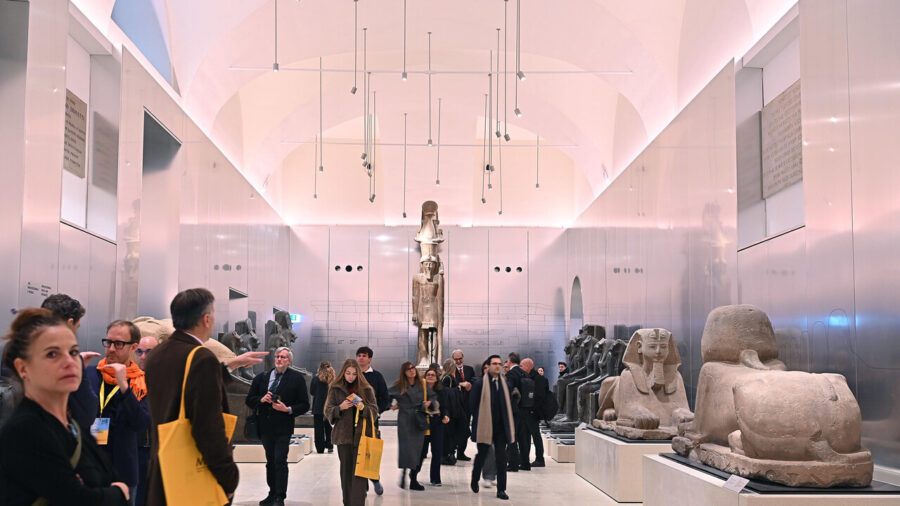
The Museo Egizio in Turin has officially received recognition as a public research institution, elevating the status of one of the world’s most significant collections of Egyptian antiquities. The Italian Ministry of University and Research granted the designation, formalizing the museum’s dual role as a cultural exhibition space and a scientific hub.
Expanding Scientific Scope
This new status formalizes the museum’s existing academic efforts. Currently, the institution oversees 30 active research projects, ranging from papyrology to materials science. The designation acknowledges the museum’s consistent investment in archaeological study, conservation techniques, and historical analysis.
Museum officials stated that the recognition validates years of work integrating curatorial duties with rigorous scientific inquiry. As a public research entity, the museum will now have enhanced opportunities to collaborate with universities and international scientific organizations, potentially streamlining funding and academic partnerships for future excavations and artifact analysis.
Future Research Trajectory
The museum plans to leverage this status to expand its scholarly output. Staff archaeologists and researchers will continue to focus on the preservation and digital documentation of the collection, which houses thousands of artifacts recovered from ancient Egyptian sites.
By solidifying its standing in the research community, the Turin museum aims to attract more international scholars and facilitate deeper cooperation on archaeological projects. This shift marks a transition toward a model where the museum functions as both a repository for historical artifacts and a laboratory for ongoing discovery.
Why it matters: This designation strengthens the link between European cultural institutions and Egyptian heritage. For researchers in the Middle East and Egypt, it creates a more formal pathway for collaborative study, ensuring that the management and analysis of Egyptian antiquities remain grounded in modern scientific standards.