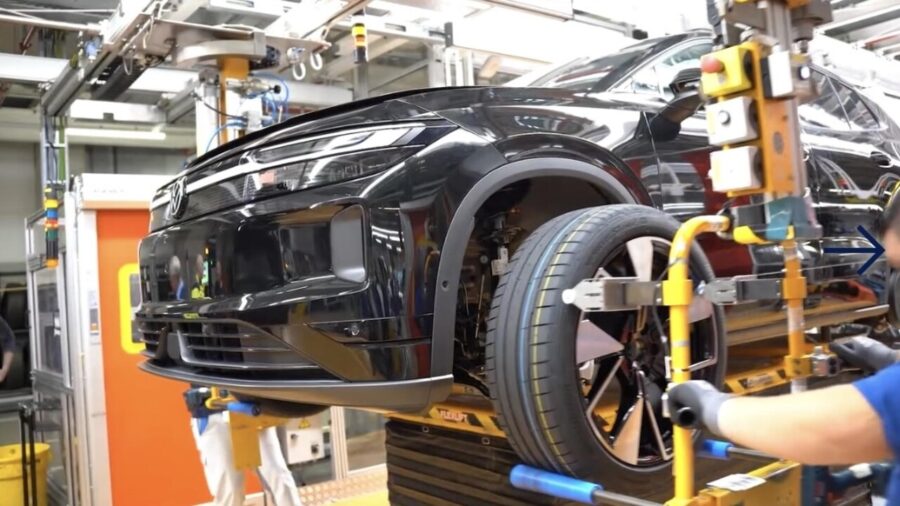
Volkswagen has officially commenced production of its new electric SUV, the ID.Tiguan, at its manufacturing facility in Emden, Germany. The company confirmed the start of assembly in a recent video demonstration detailing the production process for the vehicle.
Expanding the Electric Lineup
The Emden plant, a key site in Volkswagen’s broader electrification strategy, is transitioning its assembly lines to accommodate the growing portfolio of battery-electric vehicles. The ID.Tiguan represents the latest addition to the ID family, as the automaker seeks to compete in the expanding electric SUV market. The facility has undergone significant retooling to support the modular electric drive matrix (MEB) platform, which underpins the new model.
Volkswagen has not yet released specific technical specifications or global release dates for the ID.Tiguan. The production milestone aligns with the company’s ongoing efforts to scale its electric vehicle manufacturing capacity across its European factories.
Strategic Shift Toward Electrification
The shift at the Emden site follows Volkswagen’s global directive to phase out internal combustion engine production in favor of electric mobility. By dedicating resources to the ID.Tiguan, the manufacturer aims to leverage existing infrastructure while reducing the carbon footprint associated with both its manufacturing processes and its vehicle fleet.
The automaker plans to continue monitoring market demand and supply chain stability as it ramps up output for the new SUV. Future production numbers will be adjusted based on regional market responses and the availability of necessary components.
Why it matters: The production of the ID.Tiguan at Emden signals a continued commitment by major European manufacturers to accelerate the transition to electric vehicles. For international markets, including the Middle East and Egypt, this shift highlights the changing landscape of vehicle availability as global automakers prioritize electric models over traditional gasoline-powered alternatives in their manufacturing pipelines.