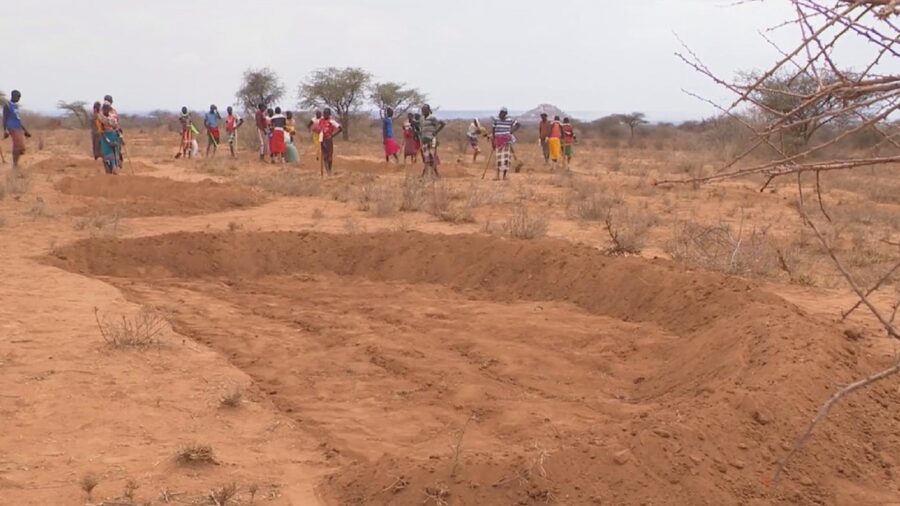
A new climate initiative in northern Kenya aims to mitigate the effects of severe drought on local pastoralist communities. The project focuses on rehabilitating arid land to improve soil moisture and lower surface temperatures in the Samburu region.
Addressing Environmental Degradation
Climate change has exacerbated dry conditions in Samburu, threatening the livelihoods of herders and their livestock. The project utilizes land restoration techniques involving the creation of pits to capture rainwater. These earthworks are designed to prevent runoff and encourage vegetation growth on previously barren terrain.
Implementing Restoration Measures
The restoration process involves digging specialized holes in the ground to trap moisture during rare rainfall events. By concentrating water in these areas, the soil can support new plant life, which in turn provides shade and reduces ground temperatures. This method is intended to stabilize the local ecosystem and provide sustainable grazing land for animals.
Current Status of the Initiative
The project is currently focused on scaling these land management techniques to cover larger areas of the Samburu region. While the long-term impact on regional climate patterns remains under evaluation, organizers state the immediate goal is to improve water retention and soil quality for local herders.
Why it matters: As arid regions across Africa face increasingly unpredictable weather patterns, simple, scalable solutions like soil restoration offer a potential model for food security. For pastoralist communities, these techniques provide a direct method to protect livestock and preserve traditional livelihoods against intensifying drought conditions.