Trade Ties and Currency Shifts
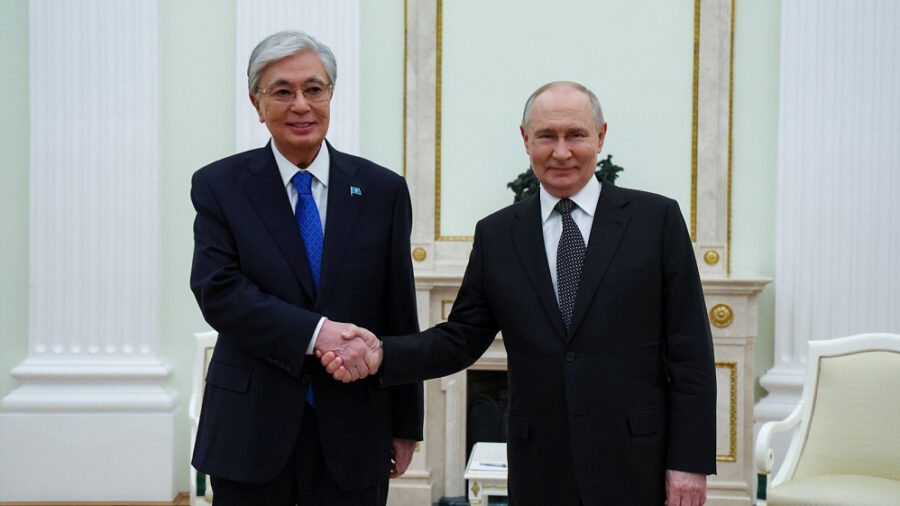
Russian President Vladimir Putin and Kazakh President Kassym-Jomart Tokayev met in Moscow this week to discuss expanding economic and technological cooperation, highlighting a significant shift in bilateral financial transactions. Putin stated that 96 percent of trade settlements between the two nations are now conducted in their national currencies, signaling a move away from reliance on foreign tender.
Trade turnover between the two countries has surpassed $28 billion and is nearing $30 billion, according to the Russian leader. Tokayev confirmed the continued growth in economic activity, noting that 124 of 178 joint projects have been implemented, with the remainder currently in progress.
Focus on Artificial Intelligence
The meeting also focused on future technological collaboration, specifically in artificial intelligence and cybersecurity. Tokayev arrived in Moscow at Putin’s invitation to serve as the guest of honor at a conference on artificial intelligence. During their discussion, Putin suggested that the two nations could explore deeper cooperation in high-technology sectors.
Tokayev expressed interest in learning from Russia’s experience in cybersecurity. The Kazakh president noted that his government supports the operations of Russian technology firms within Kazakhstan. He also highlighted Kazakhstan’s domestic progress in digital infrastructure, mentioning that the country has moved from 24th to 16th place in the UN ranking for human capital development. Tokayev has designated 2026 as the Year of Artificial Intelligence Development in Kazakhstan.
Why it matters: The move to conduct 96 percent of trade in national currencies reflects a broader trend among nations seeking to bypass the U.S. dollar and reduce exposure to international sanctions. For countries in the Middle East and Egypt, which are increasingly seeking to diversify their own currency baskets and trade partners, the Russia-Kazakhstan model offers a potential template for strengthening regional economic sovereignty and reducing dependence on traditional financial systems.