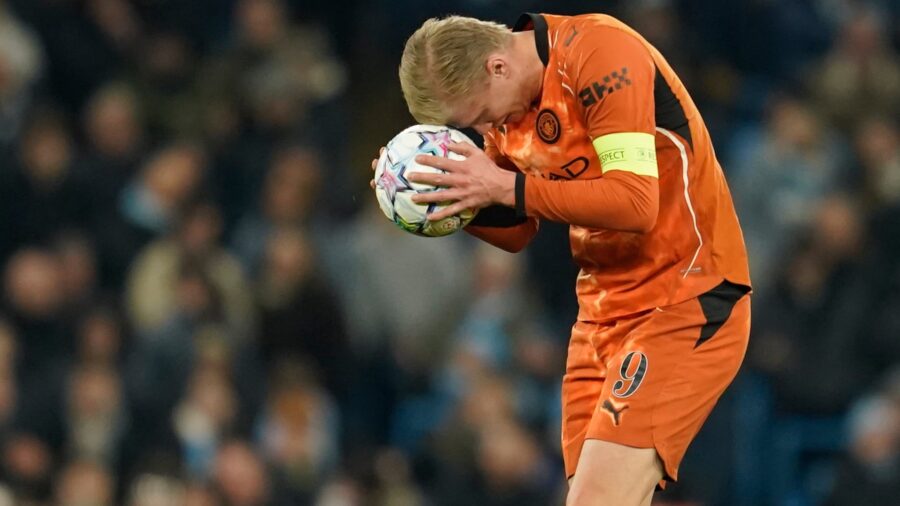
Erling Haaland stood alone at the center circle of the Etihad Stadium pitch, pressing his forehead against the cold surface of the ball. Moments earlier, Noa Lang had put Napoli ahead 2-1, leaving Manchester City players scrambling while the visitors celebrated near the corner flag. With 20 minutes remaining in the match, the 26-year-old striker appeared visibly dejected, facing the daunting task of mounting a comeback for a team struggling to find its rhythm.
A Team in Crisis
The 2-2 draw against Napoli marked the third consecutive match Manchester City has failed to win. This period of poor form follows a loss at Nottingham and a draw against Fulham. Despite his individual success—Haaland currently leads the Premier League with nine goals—the forward appears adrift within the team’s current tactical setup.
Critics point to the team’s inability to secure victories as evidence of a broader decline. While Haaland remains the most prolific scorer in the English top flight this century, personal statistical milestones offer little solace during the club’s current winless streak.
Looking Ahead
The pressure on Manchester City manager Pep Guardiola and his squad continues to mount as they prepare for upcoming fixtures. Supporters and analysts will watch closely to see if the team can stabilize its performance and regain the consistency that defined their previous seasons. Whether Haaland can adapt his role to lift the team out of this slump remains the central question for the club’s immediate future.
Why it matters: Manchester City’s current instability highlights the volatility of elite European football, where even top-tier squads can suffer rapid declines. For fans in the Middle East, where the club maintains significant investment and a growing supporter base, these results raise questions about the club’s ability to maintain its dominance on the continental stage.