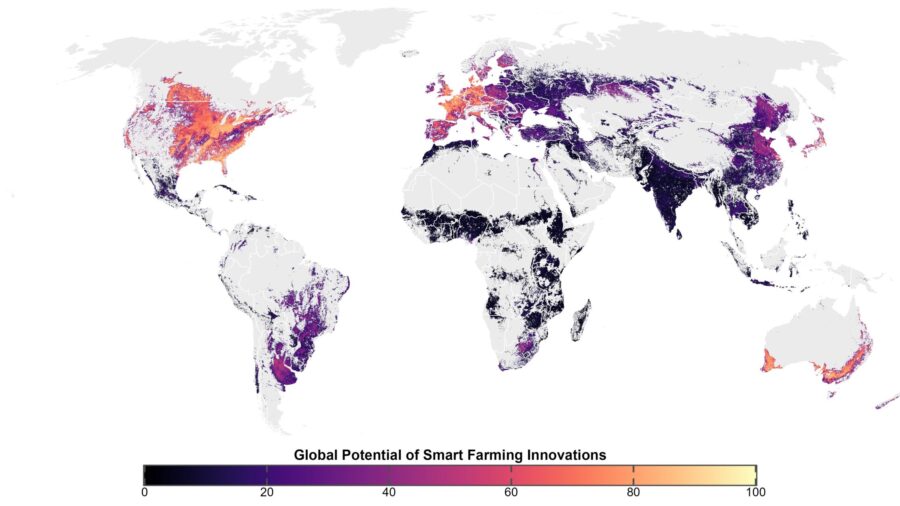
Smart farming technologies could become economically viable on 75% of global cropland within two decades, provided governments implement stricter environmental regulations. A study published in the Proceedings of the National Academy of Sciences indicates that these tools, which include weeding robots, automated irrigation, and pest-detecting drones, currently show profitability on 42% of the world’s farmland.
Researchers at the University of Bonn analyzed data from over 4,000 locations and consulted 8,000 experts to determine when these systems yield financial returns. Lead researcher David Wuepper stated that while the technology offers potential for sustainability, adoption remains challenging due to high upfront costs and technical requirements. The study suggests that regions with larger farms, higher education levels, and robust environmental policies are most likely to see successful implementation. #SmartFarming #Agriculture #Sustainability #TechNews @UN @FAO
 Egypt
 Saudi Arabia
 UAE
 Spain
 United Kingdom
 United States
 China
 India