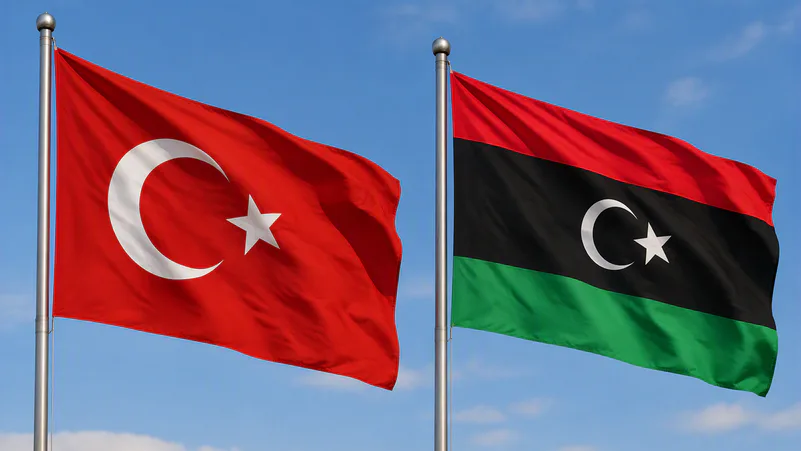
Egypt’s Foreign Ministry rejected the Libyan House of Representatives’ ratification of a 2019 maritime memorandum with Turkey on Wednesday. The ministry declared the move legally ineffective, stating it does not alter Cairo’s position on its maritime boundaries.
Disputed Maritime Claims
The Libyan House of Representatives, based in the country’s east, voted unanimously on Tuesday to approve the maritime agreement. This decision reverses the body’s prior opposition to the deal, which was originally signed between Turkey and the former Tripoli-based Government of National Accord led by Fayez Al-Sarraj. The parliament also repealed two 2020 decisions that had rejected the Turkish agreements and severed political ties with Ankara.
Egypt’s Foreign Ministry continues to view the memorandum as null and void. Cairo maintains that the agreement violates the 1982 UN Convention on the Law of the Sea, specifically citing provisions governing exclusive economic zones and continental shelves. The ministry stated the accord infringes on its sovereign rights in the eastern Mediterranean, a region where nations frequently dispute energy exploration rights and maritime borders.
Regional Reactions and Context
The agreement has historically been a point of contention. When first signed in 2019, Egypt and Greece voiced strong opposition, arguing the deal disregarded international law. Athens reaffirmed its stance this week, rejecting the Libyan parliament’s approval and stating the agreement violates regional sovereign rights.
Libya remains politically divided between rival administrations in the east and west. The eastern parliament operates under the influence of military commander Khalifa Haftar. While the eastern administration previously opposed the deal, recent diplomatic shifts have led to a rapprochement with Ankara.
Why it matters: The maritime dispute highlights ongoing tensions over energy resources in the eastern Mediterranean. Egypt’s firm rejection underscores the regional disagreement regarding the legality of the Turkey-Libya pact and its impact on the sovereign maritime boundaries of Mediterranean coastal states.
 Egypt
 Saudi Arabia
 UAE
 Spain
 United Kingdom
 United States
 China
 India