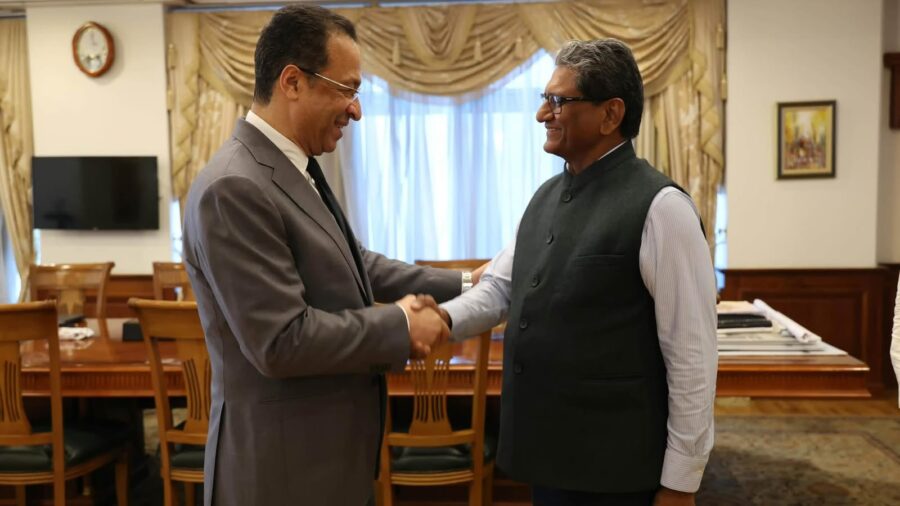
Deepening Ties in the Digital Age
In a significant move to reshape the technological landscape of the region, Egypt and India have reaffirmed their commitment to a robust partnership centered on artificial intelligence (AI), cybersecurity, and digital infrastructure. The recent high-level dialogue between Egyptian communications officials and India’s Ambassador to Cairo, Suresh K. Reddy, signals a new chapter in South-South cooperation, aiming to leverage the unique strengths of both nations to foster innovation and economic development.
The meeting, which centered on enhancing bilateral cooperation, underscored a shared vision for the future of the communications and information technology (ICT) sector. As global supply chains shift and the demand for digital talent surges, both nations are positioning themselves as critical hubs for technological advancement.
Strategic Synergy: A Gateway to Global Markets
Minister of Communications and Information Technology Raafat Hindi highlighted Egypt’s unique value proposition during the discussions. By positioning Egypt as a strategic gateway, the country is actively courting Indian enterprises looking to scale their operations into the lucrative markets of the Middle East and Africa.
Key pillars of this strategic expansion include:
- Outsourcing and Digital Services: Leveraging Egypt’s deep pool of young, tech-savvy talent to support Indian firms seeking cost-effective, high-quality outsourcing solutions.
- Electronics Localization: Encouraging Indian manufacturers to set up production facilities in Egypt, thereby reducing logistics costs and tapping into regional demand.
- Entrepreneurship and Innovation: Strengthening the ecosystem for small and medium-sized enterprises (SMEs) through cross-border knowledge transfer and mentorship programs.
India’s Technological Prowess: A Model for Development
For his part, Ambassador Suresh K. Reddy highlighted India’s rapid ascent as a global technology powerhouse. With India currently ranking as the world’s second-largest manufacturer of mobile phones, the Ambassador expressed a keen interest in transferring this manufacturing expertise to Egyptian soil. He also pointed to India’s massive investments in public digital infrastructure—specifically the widespread deployment of fibre-optic cables—as a blueprint for Egypt’s own digital transformation journey.
The dialogue also touched upon the upcoming specialized global conference on the mobile phone industry, set to take place in India this October, which is expected to serve as a platform for further collaboration and investment opportunities between the two nations.
Building a Future-Ready Workforce
Central to the discussions was the imperative of human capital development. Both sides recognized that the rapid evolution of artificial intelligence requires a workforce that is not only proficient in traditional IT roles but is also trained in advanced, future-ready skills.
The existing memoranda of understanding (MoUs) between Cairo and New Delhi—covering cybersecurity, IT qualification, and electronics training—are set to be expanded. The agreement aims to facilitate:
- Knowledge Exchange: Structured programs for Egyptian institutions to collaborate with Indian counterparts on curriculum development and research.
- AI Research & Development: A shift from basic training to high-level R&D cooperation, focusing on the ethical and practical applications of AI in governance and industry.
- Private Sector Engagement: Creating streamlined pathways for private corporations to invest in training centers that align with the specific needs of the local labor market.
As both nations look toward a digitally integrated future, this partnership promises to create a resilient corridor of innovation, bridging the gap between Indian technical expertise and Egypt’s strategic market access.