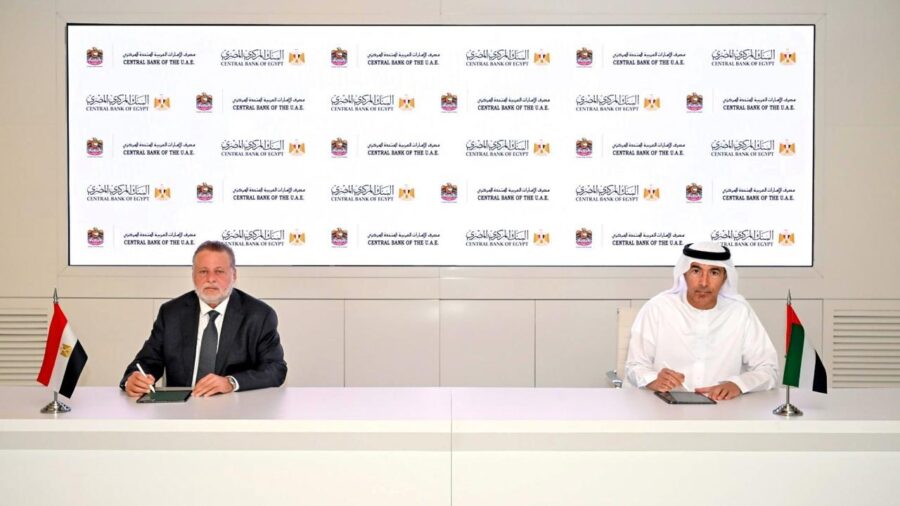
On a crisp Tuesday morning, Khaled Mohamed Balima, governor of the UAE Central Bank, and Hassan Abdalla, governor of Egypt’s Central Bank, met to sign a renewed currency swap agreement, a pact that quietly underpins daily commerce between Dubai’s glittering markets and Cairo’s bustling souks.
Building on a five‑year partnership
The refreshed deal covers AED 5 billion—about 69 billion Egyptian pounds—and will remain in force for the next five years. Both governors emphasized that the agreement reflects deepening strategic ties and a shared commitment to financial stability. Balima noted that the swap “supports financial stability and facilitates trade and investment operations,” while also advancing the use of local currencies in bilateral settlements, a practice he described as aligned with “best international standards.”
Impact on businesses and markets
For traders, the swap acts as a safety net, allowing companies to settle invoices in dirhams or pounds without relying on volatile foreign exchange markets. Abdalla highlighted that the tool “enhances the resilience of financial markets” and opens “wider horizons for cooperation in finance and investment.” By reducing currency risk, exporters and importers in both nations can focus on growth rather than hedging costs.