New Timekeeping Technology
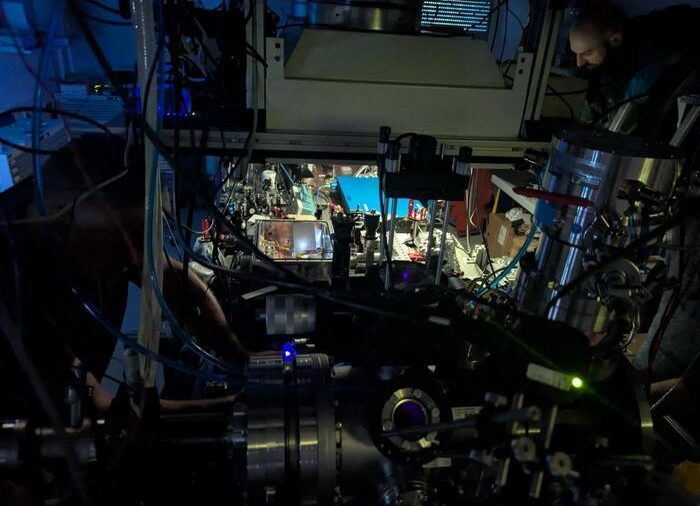
Researchers have demonstrated a functional optical clock that operates using energy transitions within an atomic nucleus. The study, published in the journal Nature, details a system utilizing the thorium-229 isotope to maintain frequency stability.
- Scientists embedded thorium-229 nuclei into a calcium fluoride crystal kept at room temperature.
- A deep-ultraviolet laser was directed through the crystal to excite the nuclei at a specific resonant frequency.
- The system automatically corrected laser frequency deviations by monitoring the nuclear response, functioning as a reference point.
- The team verified the clock’s performance over 24 hours by comparing it against an existing ytterbium ion optical clock.
While not yet more accurate than current atomic clocks, this design offers a new method to test fundamental physical laws. #Physics #Science #Technology #Research