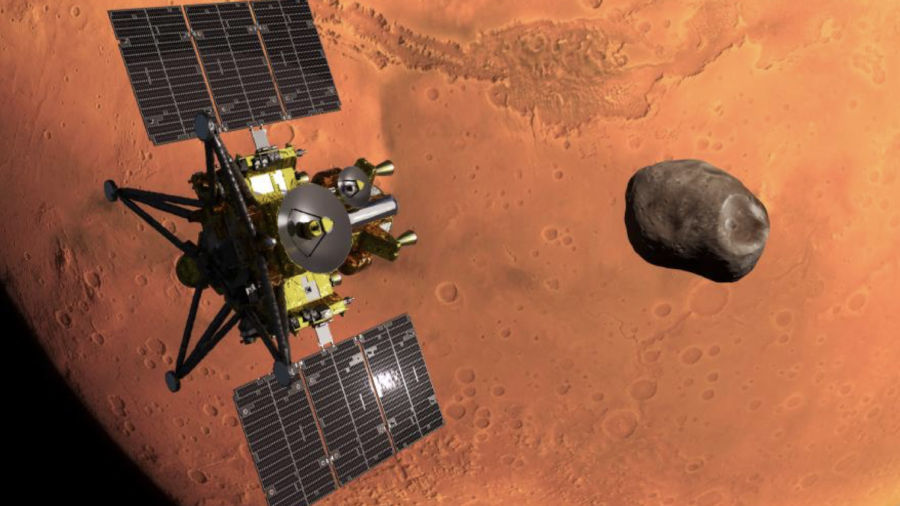
Japan’s space agency, JAXA, launched its Martian Moons eXploration (MMX) spacecraft on October 20 from the Tanegashima Space Center in Kagoshima Prefecture. The mission, carried by an H3 rocket, aims to be the first to land on a Martian moon, collect surface samples, and return them to Earth.
As of the launch, JAXA officials reported that all spacecraft systems are operating as expected. The MMX unit weighs 4,480 kilograms, with approximately 68 percent of that mass consisting of propellant required to navigate the gravitational pull of both Phobos and Mars.
Scientific Objectives and Mission Scope
The primary goal of the mission is to land on Phobos, one of Mars’ two moons, and retrieve at least 10 grams of material. Researchers intend to analyze the samples to determine the origins of Phobos and its companion moon, Deimos. Scientists currently debate whether the moons are captured asteroids or formed from debris following a massive collision with Mars.
The collected samples may also contain traces of Martian soil, which scientists estimate could comprise about 0.1 percent of the total material gathered. This dust, ejected from Mars by meteorite impacts, could provide insights into the Martian environment and the potential for past or present life.
Global Competition for Mars Samples
JAXA faces competition from China’s space program, which is preparing the Tianwen-3 mission. China plans to collect 500 grams of Martian soil for return to Earth. Both nations are currently targeting a 2031 return date for their respective missions.
The MMX mission was originally scheduled for 2024 but faced delays due to the development timeline of the H3 rocket. Because Earth and Mars align only once every two years, missing the launch window required a postponement. Both nations must now maintain strict schedules to avoid further delays in their respective return timelines.
Why it matters: The return of extraterrestrial material offers critical data on the evolution of the solar system. For the global scientific community, including researchers in the Middle East, these samples represent a significant step in understanding planetary formation and the history of the Red Planet.
 Egypt
 Saudi Arabia
 UAE
 Spain
 United Kingdom
 United States
 China
 India
