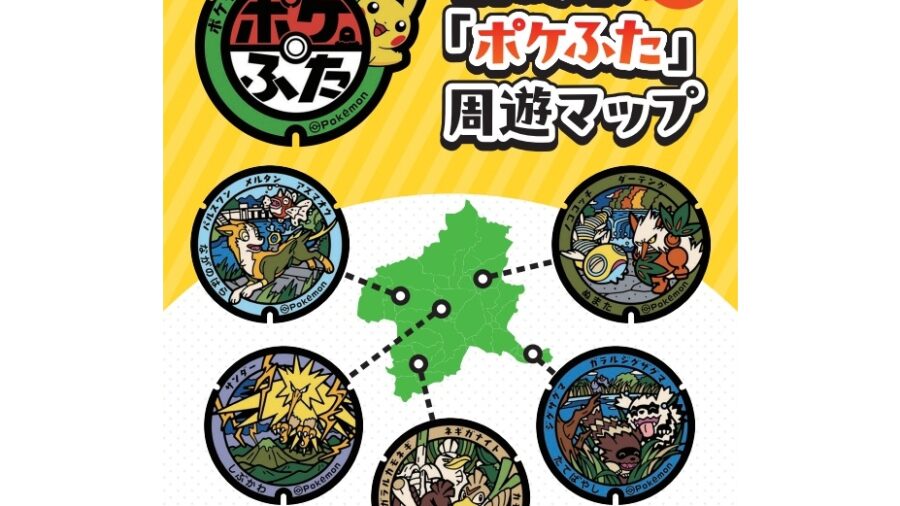
Gunma Prefecture in eastern Japan will install five new Pokémon-themed manhole covers by the end of November, the regional government announced.
The “Pokéfuta” project places artistically designed covers at public sites to promote local attractions and products. Each cover features a Pokémon species linked to the surrounding area.
In Shimonita, a cover outside the Coconita building near Shimonita Station displays Farfetch’d, Galarian Farfetch’d and Sirfetch’d, reflecting the town’s reputation for high‑quality green onions.
Near Yamba Dam in Naganohara, an installation at the Yamba Furusato‑kan road‑station shop shows Boltund alongside Meltan and Seaking, echoing the hydroelectric facility and water theme.
Tatebayashi’s Tsutsujigaoka Fureai Center in Tsutsujigaoka Park will host a cover with standard and Galarian Zigzagoon, tying in the park’s 10,000 azalea bushes that bloom in spring.
Numata’s cover at the parking area for the Fukiware Falls hiking trail features Dunsparce and Shiftry, the latter referencing the tengu folklore associated with the nearby Miroku Temple, which houses Japan’s largest tengu mask.
Finally, the Shibukawa Ikaho Ropeway’s Hototogisu Station will display Zapdos, a Flying‑type Pokémon suited to the mountain vistas offered by the ropeway.
Tourism boost and cultural tie‑ins
The manhole covers are part of a broader effort to draw visitors to lesser‑known locales in eastern Japan. By pairing popular Pokémon icons with regional specialties—such as produce, hot springs and folklore—the prefecture hopes to increase foot traffic during the autumn foliage season.
Gunma, located about two hours north of Tokyo, is already known for its hot springs and scenic landscapes. The new installations add a pop‑culture dimension that may appeal to domestic and international fans traveling from Tokyo or other parts of the country.
Next steps
Local authorities will complete the installations by late November and plan promotional materials for the upcoming winter tourism period. Visitors are encouraged to explore the sites on foot or by public transport, with many locations near stations or road‑station shops.
 Egypt
 Saudi Arabia
 UAE
 Spain
 United Kingdom
 United States
 China
 India
