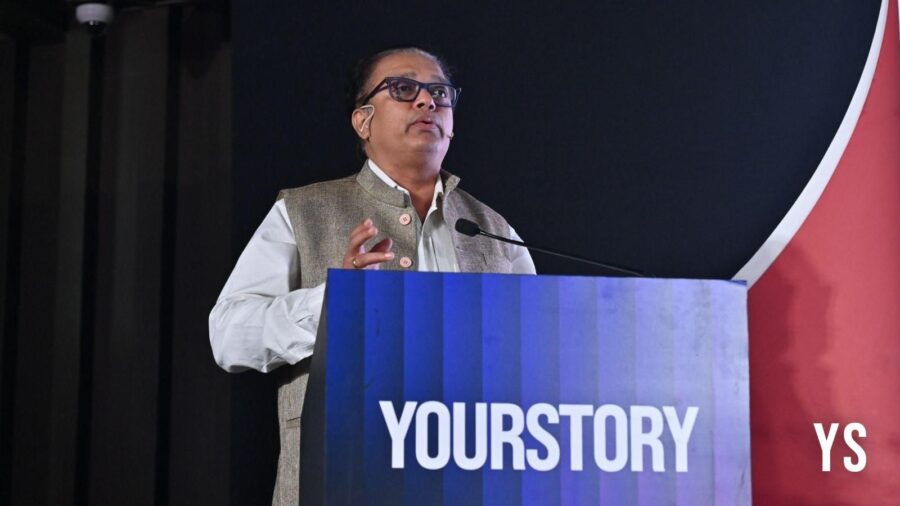
India’s economic growth model has severed the traditional link between capital investment and employment, according to K Yatish Rajawat, co-founder of the non-profit initiative Hundred Million Jobs. Speaking at the TechSparks summit, Rajawat stated that capital no longer creates jobs at the scale previously observed in the Indian economy.
The Decline of Traditional Manufacturing
Rajawat noted that the automation of factory floors began approximately a decade ago. He explained that robots have evolved beyond simple material handling to respond to complex surroundings, impacting labor-intensive processes such as welding and forging. Even small and medium-sized enterprises with turnovers of 10 crore to 50 crore rupees are increasingly adopting automated machinery, he said.
Three Trends Reshaping the Economy
According to Rajawat, three distinct factors are currently altering the employment landscape. First, the historical formula where 100 crore rupees of investment generated 10,000 jobs is no longer effective. He cited production-linked incentive schemes that favor capital investment over job creation. Second, artificial intelligence is beginning to affect white-collar roles, while automation continues to displace workers in small businesses. Third, Rajawat identified platform consolidation by dominant e-commerce and social media companies as a barrier to new entrepreneurship, which stifles the creation of new businesses and associated jobs.
Current Initiatives and Outlook
Hundred Million Jobs is currently engaged in various projects to address these challenges. In Rajasthan, the organization is collaborating with a consortium of companies to transition the state’s skilling mission into a jobs-focused program. Additionally, the group is working with foundry units in Kolhapur to reduce energy costs. Rajawat cited MIT professors Daron Acemoglu and Simon Johnson, noting that while technology eventually creates jobs, there is often a significant time lag, and those who lose employment are rarely the beneficiaries of new roles.
 Egypt
 Saudi Arabia
 UAE
 Spain
 United Kingdom
 United States
 China
 India
