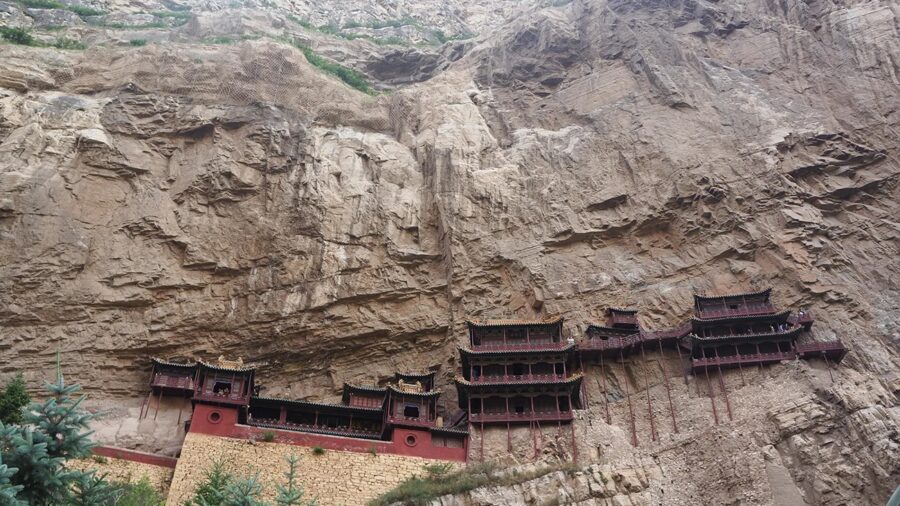
China’s Xuankong Si, known as the Hanging Temple, remains a significant draw for tourists despite difficult logistics and strict ticketing procedures. The site, built into the side of a sheer cliff in the Jinxia Gorge at the base of Mt. Heng, frequently reaches capacity, forcing visitors to navigate a complex admission process.
Travel to Datong
Reaching the temple requires a multi-stage journey. Visitors typically take a high-speed train to Datong South Station, followed by a one-hour drive into the mountainous region. The site is recognized as one of the world’s most precarious buildings due to its unique cliffside construction.
Ticketing Challenges
The temple limits daily attendance, releasing tickets in two batches of 600. The ticket counter opens at 7:30 a.m., but early arrivals are common. Because advance online reservations are restricted to Chinese residents, international visitors must secure entry in person. By mid-morning, long queues often form at the visitor center, requiring a wait of several hours before the afternoon batch becomes available.
Admission and Access
Once tickets are secured, visitors pay 15 yuan (approximately $2.25) for general area admission and an additional 100 yuan ($15) for temple access. Following ticket purchase, travelers must take an eight-minute bus ride to reach the temple entrance. Despite these logistical requirements, the site continues to attract significant crowds.
Current Status of Xuankong Si
The Hanging Temple remains open to the public, though capacity constraints and local residency requirements for advance bookings create barriers for non-resident travelers. Prospective visitors should plan for extensive wait times and potential ticket shortages.
Why it matters: The popularity of unique cultural landmarks like the Hanging Temple highlights the challenges of balancing tourism with site preservation in China. For travelers, navigating these systems underscores the necessity of understanding local administrative procedures before visiting major historical sites.
 Egypt
 Saudi Arabia
 UAE
 Spain
 United Kingdom
 United States
 China
 India
