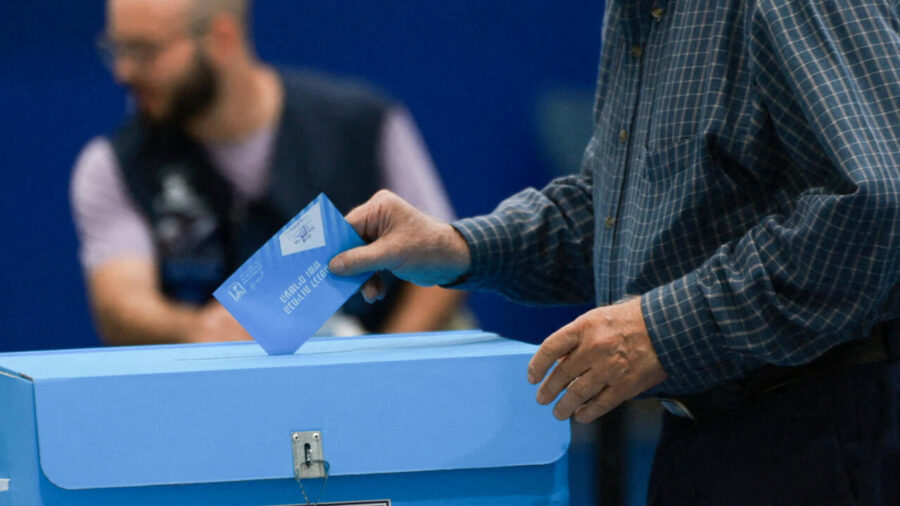
Israel’s electoral system creates significant hurdles for government formation, often leaving the country in a state of political instability long after votes are counted. While elections determine the makeup of the 120-seat Knesset, the subsequent process of assembling a governing coalition frequently results in paralysis or fragile administrations, according to political analysis.
The Structural Challenges of Knesset Coalitions
The primary difficulty stems from Israel’s proportional representation system, which allows for a fragmented parliament. Because the electoral threshold is low, numerous parties gain representation, making it statistically difficult for any single party to secure an outright majority of 61 seats. As a result, coalition-building becomes a requirement for governance.
This necessity grants smaller factions, including ultra-Orthodox and far-right nationalist parties, significant leverage. These groups often act as kingmakers, using their pivotal position to secure ministerial roles or advance specific agendas that may not align with the broader electorate. Prof. Hatem Sadek notes that these negotiations are further complicated by deep ideological divisions.
Key areas of friction include:
- Disputes over the role of religion in statehood.
- Conflicts regarding the relationship between secular and religious Zionist movements.
- Deep divisions over the Israeli-Palestinian conflict, including the two-state solution and settlement expansion.
- Debates regarding judicial authority and the powers of the Supreme Court.
Consequences of Political Fragmentation
These dynamics often lead to two recurring outcomes: political instability and paralysis. When coalition partners withdraw their support, governments can collapse before completing their parliamentary terms. Alternatively, if negotiations reach an impasse, the Knesset may be dissolved, triggering repeated elections in a short timeframe.
Furthermore, the political landscape remains constrained by the persistent reluctance of Jewish political parties to incorporate Arab political forces into governing coalitions.
 Egypt
 Saudi Arabia
 UAE
 Spain
 United Kingdom
 United States
 China
 India
