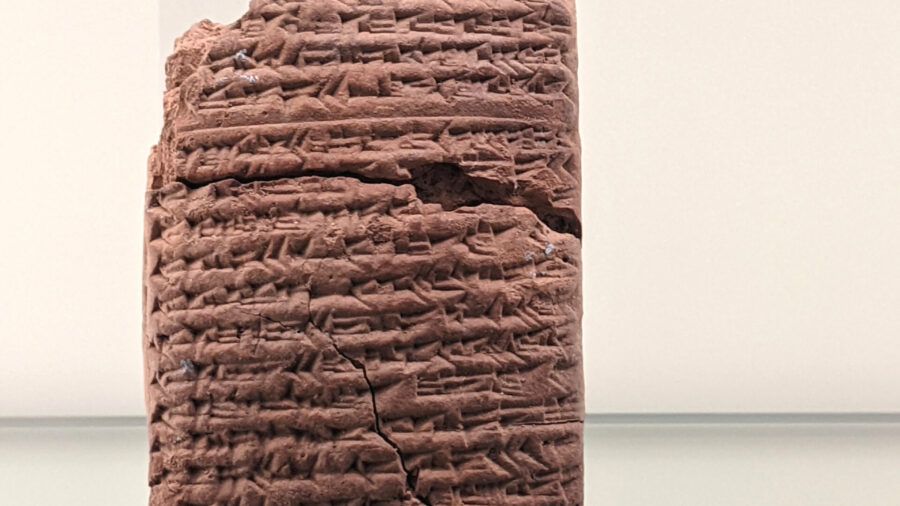
Researchers have refined the chronology of ancient Mesopotamia between 2000 and 1500 BCE by analyzing radiocarbon data from tree rings. A study published in the Proceedings of the National Academy of Sciences suggests the “middle-low” chronology provides the most accurate alignment for historical events during this era.
Key Findings in Ancient Chronology
- Refined dating method: Scientists utilized radiocarbon measurements in annual tree rings from Anatolian wooden beams to create a precise calendar anchor.
- Middle-low chronology: The study concludes that this specific chronological system aligns most effectively with known historical events and records.
- Cross-regional links: The data connects Mesopotamian history with developments in Egypt, the Levant, Anatolia, and the Aegean.
- Specific site anchoring: Researchers dated timber from the Waršama Palace at Kültepe to 1837–1836 BCE and the Sarıkaya Palace at Acemhöyük to 1778 BCE.
- Barcode-like matching: The team compared radiocarbon fluctuations in ancient wood against a reference curve to secure dates with annual precision.
Bridging Historical Gaps
Historians have long struggled to align king lists, administrative records, and astronomical observations with exact calendar years. Discrepancies between competing high, middle, and low chronologies often resulted in uncertainties spanning decades or even a century. By analyzing timber from sites like Kültepe and Acemhöyük, which maintained trade links with Mesopotamia, researchers established a timeline from 2072 to 744 BCE.
Charlotte Pearson, a dendroarchaeologist at the University of Arizona, led the study. Her team used a technique where annual radiocarbon fluctuations act as a barcode, allowing them to match unknown wood sequences to established calendar dates. A distinct radiocarbon shift identified around 1532–1531 BCE at the site of Gordion allowed the team to secure the sequence with high confidence.
 Egypt
 Saudi Arabia
 UAE
 Spain
 United Kingdom
 United States
 China
 India
