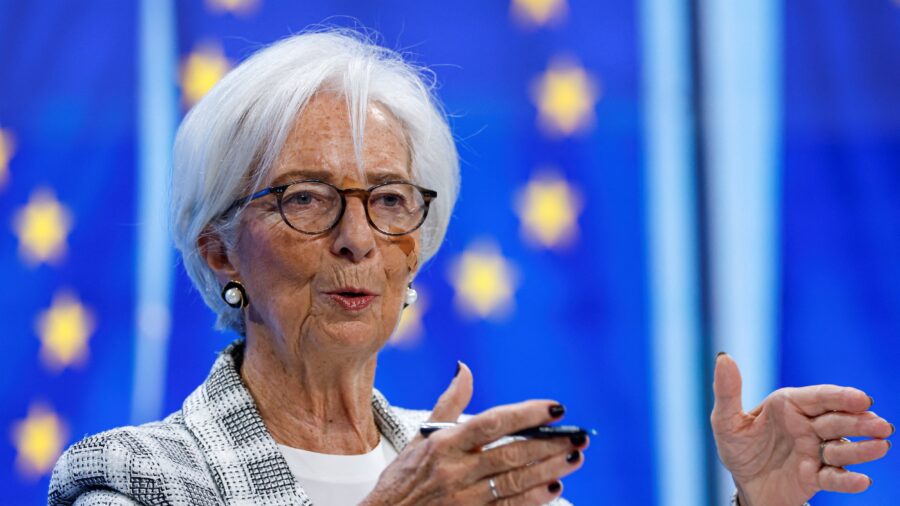
European Central Bank (ECB) President Christine Lagarde will step down from her position in February 2027, months before her official term concludes. Her departure follows a series of high-level exits within the bank’s executive committee, marking a significant transition for the eurozone’s monetary authority.
Executive board member Isabel Schnabel is scheduled to join the International Monetary Fund (IMF) in January. Additionally, the term for chief economist Philip Lane is set to expire in May. These departures mean that nearly half of the ECB’s executive committee will see a change in leadership within a six-month period.
A Transition in Economic Strategy
The upcoming turnover arrives at a time when the central bank faces a complex economic landscape. The new executive team will inherit responsibilities for managing monetary policy amid global financial uncertainty. The ECB’s primary mandate involves maintaining price stability and overseeing banking supervision across the eurozone.
The executive committee is responsible for preparing Governing Council meetings and implementing monetary policy decisions. The departure of key figures like Schnabel and Lane, combined with Lagarde’s early exit, creates a substantial gap in institutional memory and policy continuity. Observers note that the composition of the new committee will be instrumental in how the bank addresses future inflation targets and growth challenges.
Context of the Executive Changes
Lagarde, who assumed the role in 2019, has overseen the bank during the COVID-19 pandemic and subsequent inflationary pressures. Her decision to leave early shortens her eight-year term. The committee members serve non-renewable eight-year terms, a structure designed to ensure independence from political pressures.
The process for selecting replacements involves nominations from member states, followed by approval from the European Council and the European Parliament. This selection process will likely draw attention from market analysts and international observers as they assess the future direction of the bank’s fiscal guidance.
 Egypt
 Saudi Arabia
 UAE
 Spain
 United Kingdom
 United States
 China
 India
