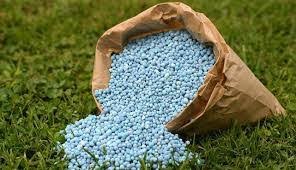
Egyptian factories are pushing increased volumes of chemical products and fertilizers into international markets, capitalizing on rising global demand. The Chemical and Fertilisers Export Council reported Sunday that the sector generated $9.54 billion in export revenue during the first nine months of 2026, a 34% increase from the $7.14 billion recorded during the same period in 2025.
Sector Growth and Market Performance
This $2.4 billion revenue boost highlights an expanding export base for Egypt. According to the council, fertilizers led the sector with $2.53 billion in sales, followed by petrochemicals at $2.43 billion and plastics and polymers at $1.98 billion.
Khaled Abu El-Makarem, chairperson of the council, attributed the growth to increased production capacity and the ability of Egyptian firms to compete in both traditional and emerging markets. “The performance reflects the sector’s growing export capabilities,” Abu El-Makarem stated, noting that companies are successfully tailoring products to meet specific international requirements.
The European Union remains the primary destination for these exports, accounting for $3.47 billion or 36.4% of the total volume. Asian markets, excluding Arab nations, followed with $2.28 billion, while shipments to Arab countries totaled $1.74 billion.
Future Export Strategy
The council plans to maintain this momentum by focusing on increasing the added value of Egyptian-made products. Strategies include organizing trade missions, facilitating participation in international exhibitions, and conducting market research to penetrate new regions.
Looking ahead, the council intends to build on this geographical diversification. Officials are eyeing further expansion in African and American markets while continuing to solidify their presence in Europe and the Arab world.
Why it matters: This data underscores the vital role of the chemical and fertilizer industry in Egypt’s national economy. By generating significant foreign currency inflows and diversifying trade partners, the sector serves as a key pillar for Egypt’s broader industrial growth and international trade strategy.
 Egypt
 Saudi Arabia
 UAE
 Spain
 United Kingdom
 United States
 China
 India
