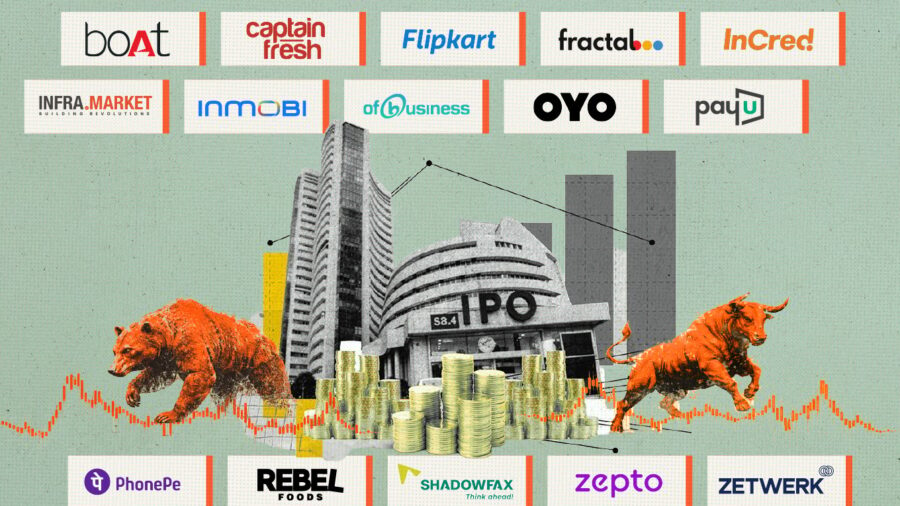
Indian startups are sustaining a surge in public market activity, with 17 new-age technology companies listing on the bourses so far this year. This follows a record-breaking 2025, where 18 startups raised a combined ₹41,248 crore. The IPO pipeline remains active, with 25 companies having filed draft red herring prospectuses (DRHPs) and another 25 in final planning stages.
Market Drivers and Regulatory Support
The current market momentum is attributed to a combination of economic growth and regulatory changes. The Securities and Exchange Board of India (SEBI) has implemented reforms, including simplified DRHP filings and more flexible employee stock ownership plan (ESOP) rules, which have reduced administrative burdens for founders. Investor participation has also expanded, with the number of demat accounts in India surpassing 20 crore.
Recent market debuts include ESDS Software Solution, Klassroom, RentoMojo, SEDEMAC, Kissht, LEAP India, and Shiprocket. Analysts note that public investors are increasingly prioritizing companies that demonstrate sustainable unit economics, operational discipline, and governance over rapid, headline-driven growth. According to Rehan Yar Khan, managing partner at Orios Venture Partners, 2026 will be defined by a focus on predictable cash flows and capital efficiency.
Challenges and Outlook
Despite the bullish outlook, the market faces headwinds. Foreign institutional investor participation has declined amid geopolitical tensions and muted secondary market performance. Retail subscription levels are also showing signs of moderation. Ashish Kumar, co-founder at Fundamentum Partnership, stated that public markets are currently rewarding founders who demonstrate long-term commitment and the ability to expand into adjacent profit pools.
Looking ahead, major entities such as OYO and Razorpay are expected to launch IPOs in 2026, with the potential to raise nearly ₹20,000 crore combined.
 Egypt
 Saudi Arabia
 UAE
 Spain
 United Kingdom
 United States
 China
 India
