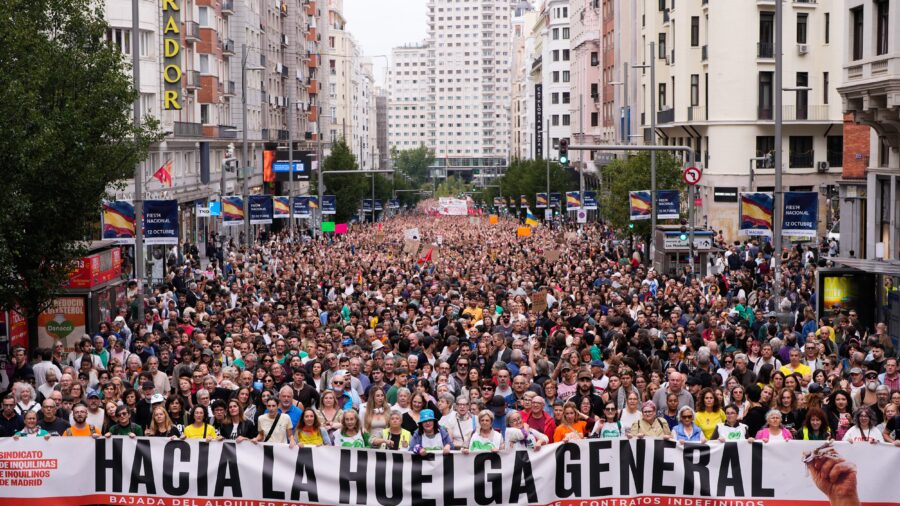
Labor unions across Spain are preparing for a general strike scheduled for November 11, with organizers predicting uneven participation across different sectors and regions. Union officials, speaking on condition of anonymity, indicated that the strike is unlikely to halt economic activity on the scale of historical labor actions. Instead, organizers are aiming to replicate the social impact of the 2018 feminist marches by focusing on housing reform.
Weeks leading up to the strike
Local organizing committees, such as those in Getafe, have been coordinating for several weeks. Sergio Jaramillo, an architect and member of the local strike committee, stated that efforts are divided between logistics and public outreach. According to Jaramillo, the movement is attracting young participants who are unaffiliated with formal organizations but are motivated by current economic conditions.
Recent weeks of coordination
Union sources report that initial tensions between larger, traditional unions and smaller, alternative organizations have eased. The Sindicato de Inquilinas (Tenants’ Union) has played a central role in mediating these groups. In major cities like Madrid and Barcelona, groups including CC OO, UGT, CGT, and CNT are planning joint mobilizations. However, coordination efforts have failed in some locations, including Zaragoza, Granada, Valladolid, and Pamplona, where smaller and larger unions remain divided.
Current status of the strike
As the November 11 date approaches, the strike is characterized by its specific focus on housing policy rather than traditional labor disputes. While widespread economic disruption is not anticipated by union insiders, they maintain that the success of the event will be measured by its ability to shift public discourse on housing rights. The movement relies heavily on grassroots organization and the involvement of younger, independent activists.