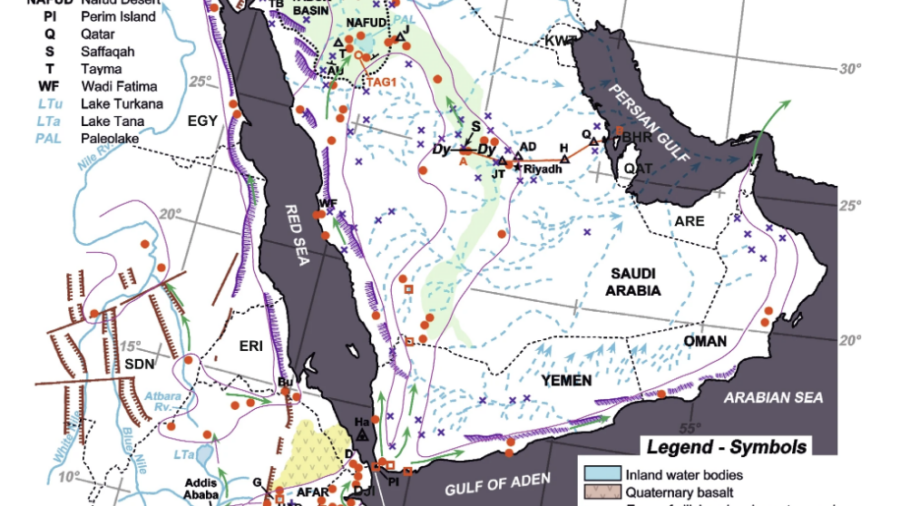
A new study published in the Hydrogeology Journal suggests that groundwater reserves and natural springs were critical for early human migration out of East Africa. Researchers indicate that these water sources provided essential refuges, allowing Homo erectus and other early hominins to traverse arid landscapes as they moved into the Arabian Peninsula and Eurasia approximately two million years ago.
The Role of Hidden Water Sources
While climate change and food availability are frequently cited as drivers of early human movement, the study argues that water access has been historically overlooked. Mark Cuthbert, a professor of Earth and environmental sciences at Cardiff University and co-author of the research, states that surface water bodies like rivers and lakes disappear quickly during droughts. In contrast, large underground aquifers can sustain springs for thousands of years, even during prolonged dry periods.
Researchers reconstructed ancient water landscapes in East Africa and Arabia to identify potential migration corridors. Evidence suggests that springs acted as reliable water points, creating habitable zones in regions that would otherwise be inhospitable. Archaeological findings support this, with stone tools and remains discovered near ancient wetlands and freshwater springs in Tanzania dating back 1.8 million years, often located near saline lakes that were unsafe for consumption.
Migration Routes and Survival
The study highlights the Bab el-Mandeb Strait, between modern-day Djibouti and Yemen, as a potential transit point for early human expansion. Accessing these routes required navigating regions where surface water was scarce. Experts suggest early humans may have located water by following animals or by digging shallow wells in dry riverbeds. While such manual methods leave little archaeological trace, the researchers argue that the absence of direct evidence does not preclude their use.