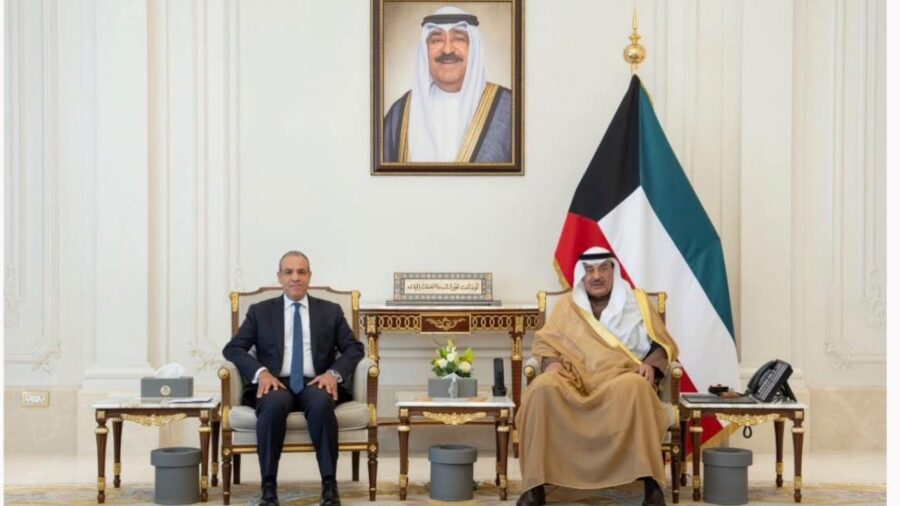
Egyptian Foreign Minister Badr Abdelatty and his Kuwaiti counterpart, Sheikh Jarrah Jaber Al-Ahmad Al-Sabah, concluded the 14th session of the Egyptian-Kuwaiti Joint Committee in Kuwait on Sunday. The meeting resulted in the signing of several agreements and memoranda of understanding intended to bolster bilateral cooperation.
Strengthening Economic Ties
During the visit, Abdelatty met with Kuwait’s Crown Prince Sheikh Sabah Khalid Al-Hamad Al-Sabah to discuss strategies for deepening economic engagement. The Egyptian Foreign Ministry stated the delegations signed political and technical minutes that serve as a roadmap for cooperation until the next committee session, scheduled for Cairo in 2028.
Abdelatty encouraged increased trade and two-way investment, emphasizing the role of the Egyptian-Kuwaiti Business Council. He noted that Egypt is actively working to improve its investment climate and remove obstacles for foreign partners. The minister highlighted that Egypt is prepared to offer competitive incentives, including the “golden licence,” to attract Kuwaiti companies. Furthermore, he stated that Egypt’s recent structural and fiscal reforms have increased the economy’s resilience.
The discussions also covered labor relations, with Abdelatty expressing Egypt’s readiness to supply more skilled professionals to the Kuwaiti market. He acknowledged the contributions of the Egyptian community to Kuwait’s development and thanked the Kuwaiti leadership for their support of Egyptian residents.
Regional Security and Diplomacy
The delegations addressed several pressing regional issues, including the conflict in Gaza, the ongoing crises in Sudan and Yemen, and maritime security in the Red Sea and the Bab el-Mandeb Strait. Abdelatty affirmed Egypt’s solidarity with Kuwait and condemned any attacks against Gulf states.
Both sides emphasized the necessity of diplomatic solutions to prevent further military escalation in the region. They agreed to maintain ongoing coordination to preserve regional stability.