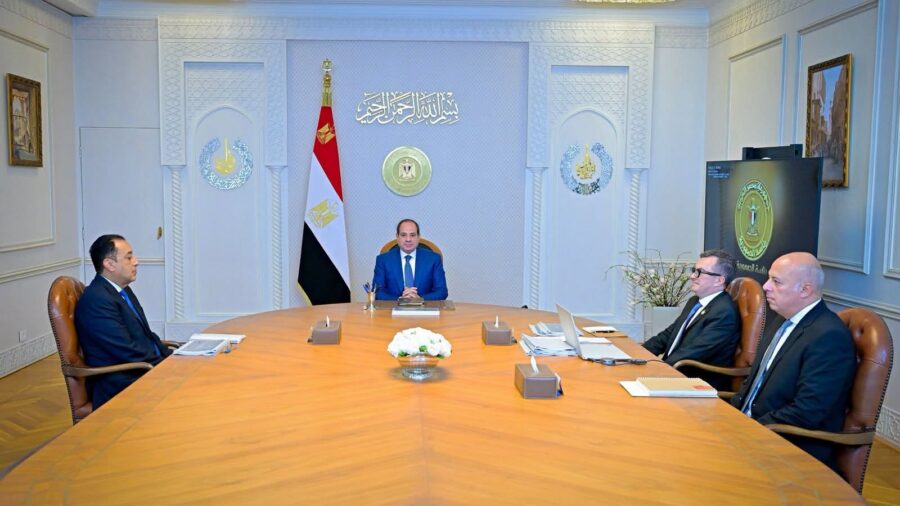
President Abdel Fattah Al‑Sisi reviewed Egypt’s economic and social development plan for 2026/27, which aims for 5.4% growth and EGP 3.7 trillion in investment.
Sunday meeting with senior ministers
The president met Prime Minister Mostafa Madbouly and Planning and Economic Development Minister Ahmed Rostam on Sunday. They discussed the 2026/27 plan, the National Economic Transformation Programme for 2027‑2030, and preparations for a World Economic Forum‑coordinated business forum in Cairo.
2026/27 plan details
Rostam said the plan includes legal and regulatory amendments to improve the investment climate and protect investors’ rights. It also proposes reforms to the State Ownership Policy and a government asset‑offering programme. The president called for greater private‑sector participation, competition and policies that boost employment.
2027‑2030 National Economic Transformation Programme
Officials reviewed the programme, aligning it with sectoral strategies, the industrial development strategy and the national employment strategy. The programme contains measures to strengthen resilience to economic crises.
Digital government services
The meeting addressed expanding electronic payment options for government services, following the Egypt Forum 2026 recommendations. Al‑Sisi instructed officials to develop new e‑payment mechanisms to accelerate digitalisation, improve efficiency and increase transparency.
Rostam added the ministry is mapping labour‑market skill demand and expanding training, including a partnership with LinkedIn.
Business meeting in Cairo, 16‑17 November 2026
The presidency is preparing an Egypt‑focused business meeting on 16‑17 November 2026, in cooperation with the World Economic Forum. The event will showcase investment opportunities across multiple sectors.
Financing reforms
Al‑Sisi directed officials to finalise regulatory and institutional frameworks for new financing mechanisms involving international institutions and private investors in infrastructure projects. He stressed that financing requests must be assessed against national priorities and alternative funding options to select the most cost‑effective arrangements.