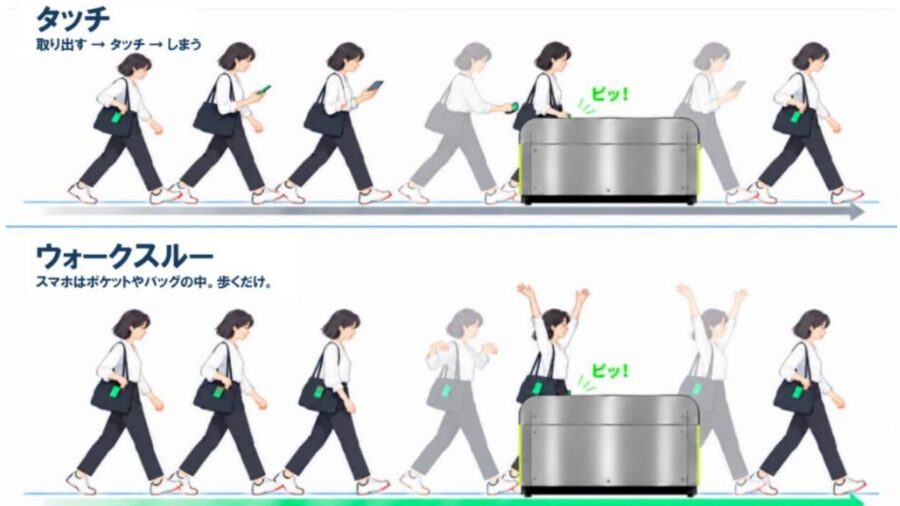
Commuters navigating Tokyo’s dense train network will soon experience a new method of transit access that eliminates the need to tap a card or phone against a reader. East Japan Railway Company (JR East) announced it will implement a walk-through ticket gate system, allowing passengers to move through turnstiles without physical contact.
New Wireless Technology
The system utilizes ultra-wideband (UWB) wireless communication. This technology allows ticket gates to detect compatible smartphones from a distance with high positioning accuracy. Unlike current methods that require users to hold devices close to a sensor, the new gates will process fare payments while phones remain in pockets or bags.
JR East stated that users will not need to register for new accounts; existing Mobile Suica profiles will remain compatible. The company confirmed that processing speeds will match current tap-and-go technology. The gates will accommodate both the new walk-through method for smartphone users and traditional touch-based readers for physical IC cards.
Trial and Rollout Schedule
JR East plans to begin testing the system at 14 major stations, including Tokyo, Shinjuku, and Shibuya, from April 10, 2027, through February 29, 2028. Following the trial, the company intends to install the gates at 40 stations across the Tokyo metropolitan area starting in the spring of 2028. This initial rollout will cover the entire JR Yamanote Line, as well as stations serving Narita and Haneda airports.
Why it matters: This development represents a significant step in transit automation for one of the world’s busiest rail networks. For global commuters and transit authorities, particularly in rapidly urbanizing regions like the Middle East, the transition from physical interaction to passive, sensor-based transit access offers a model for increasing throughput and reducing congestion in high-volume public transport hubs.