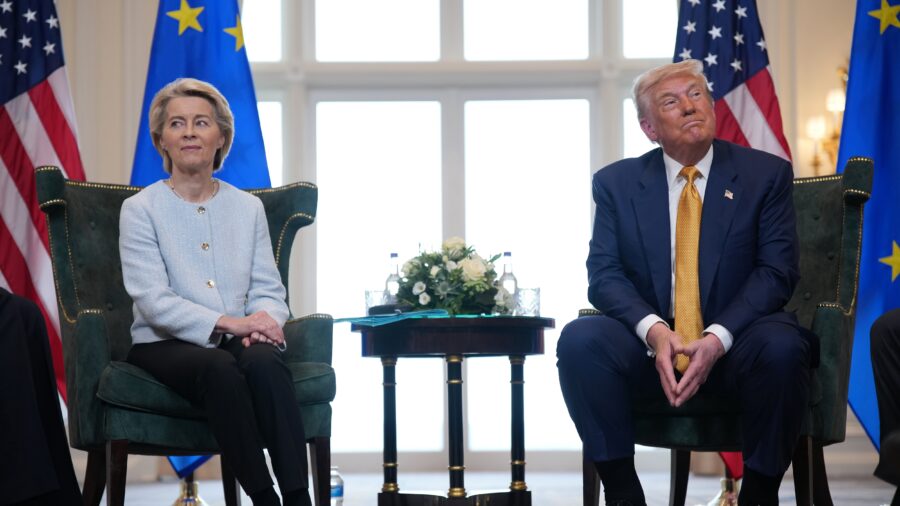
European leaders are reassessing the continent’s security and economic policy as the relationship with the United States undergoes significant changes under Donald Trump. Officials are signaling a move toward greater independence to mitigate risks posed by shifting American priorities.
The Erosion of Security Assurances
European policymakers increasingly view the traditional U.S. security umbrella as unreliable. Concerns are rising that the long-standing transatlantic partnership, once a cornerstone of European stability, is weakening. Analysts note that the current U.S. administration’s rhetoric and policy decisions have prompted leaders in Brussels to question the continuity of American military commitments to the region.
Economic and Political Friction
Tensions have escalated due to multiple factors, including U.S. threats to impose trade tariffs on European goods. Furthermore, European officials have expressed alarm over Washington’s support for Euroskeptic movements across the continent. These political interventions, combined with the U.S. administration’s close diplomatic ties to Russian President Vladimir Putin, are viewed by many European governments as direct challenges to the integrity of the European project.
The Push for Strategic Autonomy
In response to these developments, European institutions are accelerating efforts to establish strategic autonomy. The goal is to develop independent tools and capabilities that allow Europe to navigate a global landscape where the established post-war order is no longer guaranteed. Policymakers are prioritizing self-sufficiency in defense and trade to protect their interests against external pressures.
Current Status of Transatlantic Relations
Europe continues to navigate a period of adjustment as it decouples from traditional U.S. policy reliance. The focus remains on building internal capacity to manage security and economic threats independently.