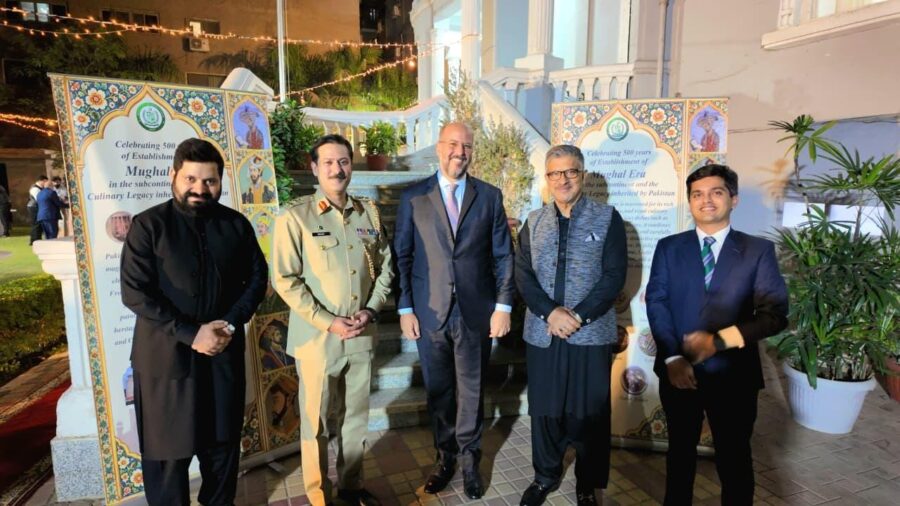
The Embassy of Pakistan in Egypt hosted a cultural event this week to commemorate the 500-year legacy of the Mughal Empire. Attendees, including diplomats and Egyptian officials, examined the empire’s historical contributions to architecture, arts, and cuisine in South Asia.
1526: The Mughal Era Begins
Pakistan’s Ambassador to Egypt, Aamir Shouket, traced the origins of the Mughal era to 1526. He cited Babur’s victory at the First Battle of Panipat as the starting point for a period marked by advancements in governance, architecture, and cultural exchange.
Cultural and Culinary Legacy
Ambassador Shouket described how Mughal influence shaped contemporary Pakistani identity. He pointed to landmarks in Lahore, such as the Badshahi Mosque, Lahore Fort, and the Shalimar Gardens, as examples of the synthesis between Persian, Central Asian, and local traditions. The event also highlighted the development of the Urdu language, calligraphy, and miniature painting. A central component of the celebration focused on culinary history, featuring dishes such as biryani, qorma, kebabs, and shahi tukray. The ambassador noted that these recipes evolved through generations of local creativity.
Shared Civilizational Ties
The event concluded by highlighting the diplomatic relationship between Pakistan and Egypt. Ambassador Shouket stated that both nations are heirs to significant civilizations, with monuments that represent historical memory and creativity. He emphasized that the Mughal legacy remains a living heritage that connects different cultures through art and food. Why it matters: The event underscores the shared cultural values between Pakistan and Egypt. By drawing parallels between the two nations’ traditions of hospitality and their historical appreciation for monuments, the embassy sought to strengthen diplomatic and cultural ties between the two countries.
 Egypt
 Saudi Arabia
 UAE
 Spain
 United Kingdom
 United States
 China
 India
