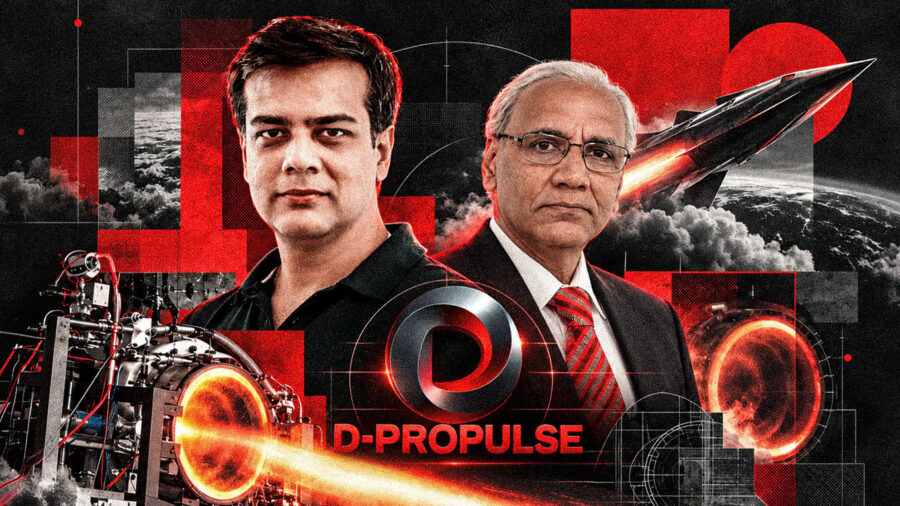
Indian defence startup D-Propulse demonstrated a 5 kN rotating detonation engine (RDE) at DRDO’s Hyderabad laboratory on July 2026, marking a step toward reducing the country’s reliance on imported missile propulsion technology.
The company, founded in 2025 by defence analyst Saurav Jha and former DRDO scientist Dr. V. Ramanujachari, says its RDE uses supersonic detonation waves instead of a steady flame, promising higher thermal efficiency and lower weight for high‑speed drones and missiles.
According to Jha, the engine is 15‑25% more thermally efficient than conventional air‑breathing jet engines and could be manufactured at least 60% cheaper than standard ramjets. The claim rests on projected production economics; no commercial‑scale manufacturing has yet occurred.
During the test, the proof‑of‑concept motor exceeded its projected thrust despite reduced airflow and completed five ground runs within a 24‑hour period. D-Propulse asserts that the RDE’s simpler hardware and fewer moving parts enable easier scaling.
Background and technology
India has pursued an indigenous jet engine for nearly four decades, yet still depends on foreign designs for most missile and aircraft propulsion. Conventional engines burn fuel in a continuous flame, while an RDE ignites a fuel‑air mixture with a spark, creating a shockwave that circulates around a ring‑shaped chamber thousands of times per second. The wave compresses and ignites fresh mixture, producing high‑pressure gases that generate thrust.
Ramanujachari previously led DRDO’s scramjet programme and contributed to the Akash missile’s propulsion system. His research on RDEs at IIT Madras formed the technical basis for the startup.
Implications and next steps
D-Propulse plans to refine the engine for integration into missile and unmanned aerial vehicle platforms. Validation through flight tests and eventual production will be required to confirm cost and performance claims.
Why it matters: If D-Propulse can deliver cheaper, more efficient propulsion, India could lower its dependence on foreign missile engine technology, strengthen its aerotech sector and potentially offer export‑ready engines to regional partners.
 Egypt
 Saudi Arabia
 UAE
 Spain
 United Kingdom
 United States
 China
 India
