Cultural Exchange Through Ancestral Traditions
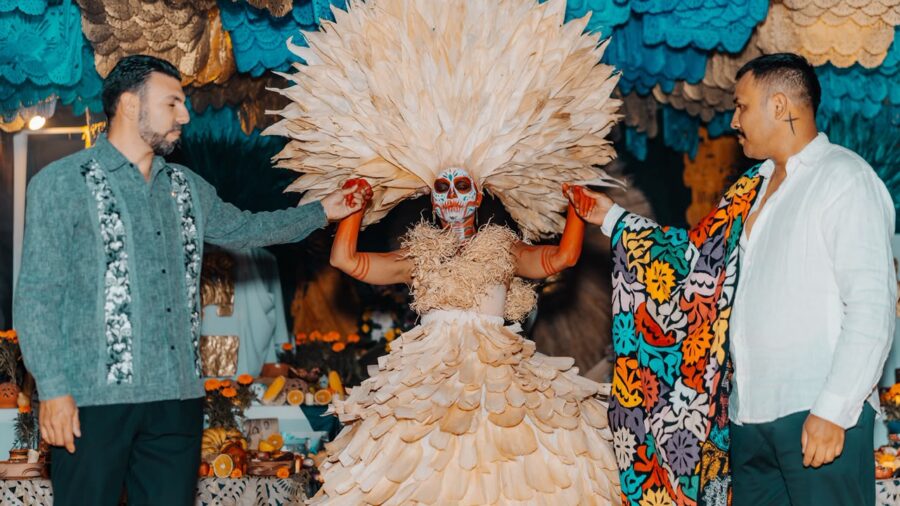
The Embassy of Mexico in Egypt marked the Day of the Dead this week by opening an exhibition titled “Echoes of Eternity” at the ambassador’s residence in Cairo. The installation features an ofrenda, or altar, designed to honor the deceased, blending Mexican traditions with themes drawn from ancient Egyptian history.
Visual artist Roberto Jiménez, a native of Oaxaca, Mexico, traveled to Cairo to lead the project. Jiménez works with natural materials such as feathers and plant fibers to create sculptural pieces and garments. His contribution to the exhibition offers a contemporary perspective on the cultural heritage of his home state.
The altar itself was coordinated by artist Mafalda Budib. Its design draws specific inspiration from the Zapotec tombs of Monte Albán in Oaxaca and the funerary rituals associated with King Tutankhamun. The project was a collaborative effort involving the Mexican community in Egypt, alongside students and volunteers from local academic institutions.
Linking Mexican and Egyptian Heritage
UNESCO recognizes indigenous festivities honoring the dead as part of the Representative List of the Intangible Cultural Heritage of Humanity. These traditions typically involve families arranging offerings, food, and flowers to remember ancestors.
During the event, Mexico’s Chargé d’Affaires in Egypt, Héctor Ortega, addressed attendees. He stated that the Day of the Dead does not ignore the pain of loss but affirms that loved ones remain present as long as they are remembered. Ortega noted that while Mexico and Egypt are geographically distant, both cultures share a practice of families gathering to share stories and honor those who came before them.
Why it matters: This event highlights the cultural parallels between Mexico and Egypt, specifically regarding how both societies preserve ancestral memory. By merging Zapotec funerary symbolism with Egyptian historical references, the embassy aimed to foster dialogue between two nations with long-standing traditions of commemorating the dead.
 Egypt
 Saudi Arabia
 UAE
 Spain
 United Kingdom
 United States
 China
 India
