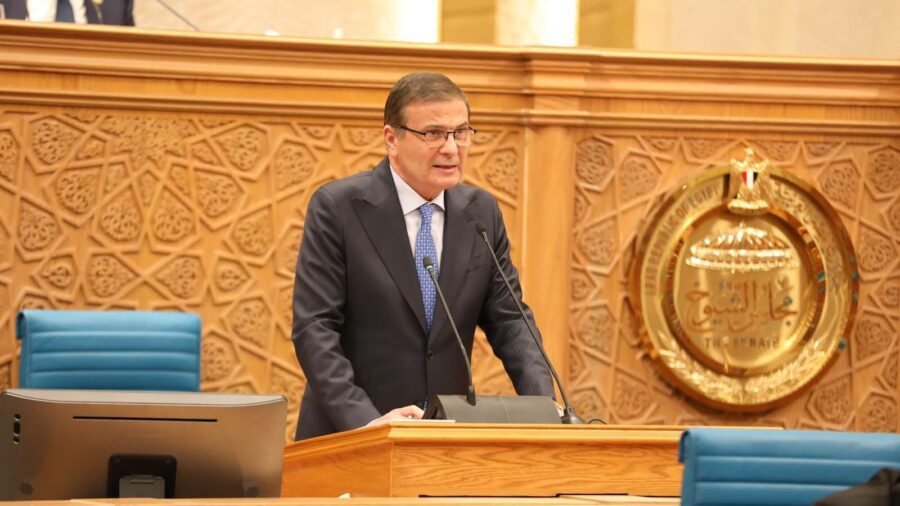
Egypt’s Minister of Agriculture and Land Reclamation Alaa Farouk announced an increase in national wheat production to 11 million tonnes during 2026. Speaking before the Senate, the minister detailed a comprehensive food security strategy focused on land expansion and increased yields.
2026 Production and Expansion
The total area dedicated to wheat cultivation expanded to 3.7 million feddans, producing an average yield of 20 ardebs per feddan. The government incentivized this growth by raising the wheat procurement price to EGP 2,500 per ardeb. Overall, Egyptian farmland has grown to 10.5 million feddans, with total cropped area reaching 17.5 million feddans due to multi-harvest practices.
Livestock and Export Performance
Agricultural exports reached 9.5 million tonnes in 2026, serving 160 international markets. In 2025, the total value of these exports was approximately $11.5 billion. Egypt currently ranks as the world’s leading exporter of citrus and frozen strawberries. Domestic production for essential food items remains high, with full self-sufficiency in fresh milk and table eggs, 98% in poultry, and 60% in red meat.
Policy and Subsidy Adjustments
The ministry maintains fertiliser subsidies exceeding EGP 35 billion annually. While farmers continue to pay a fixed rate of EGP 4,500 per tonne, the ministry is shifting its subsidy strategy to prioritize strategic crops. The ministry is also updating the 1966 Agriculture Law and the 1980 agricultural cooperatives law to modernize oversight. Additionally, the government has provided EGP 30 billion in subsidized loans at a 5% interest rate to support agricultural development.
Current Status of Egyptian Agriculture
The Ministry of Agriculture continues to implement a five-pillar strategy involving land expansion, seed variety improvement, livestock development, export competitiveness, and digital modernization. Researchers have introduced 77 new field crop varieties and 51 vegetable varieties to boost productivity.