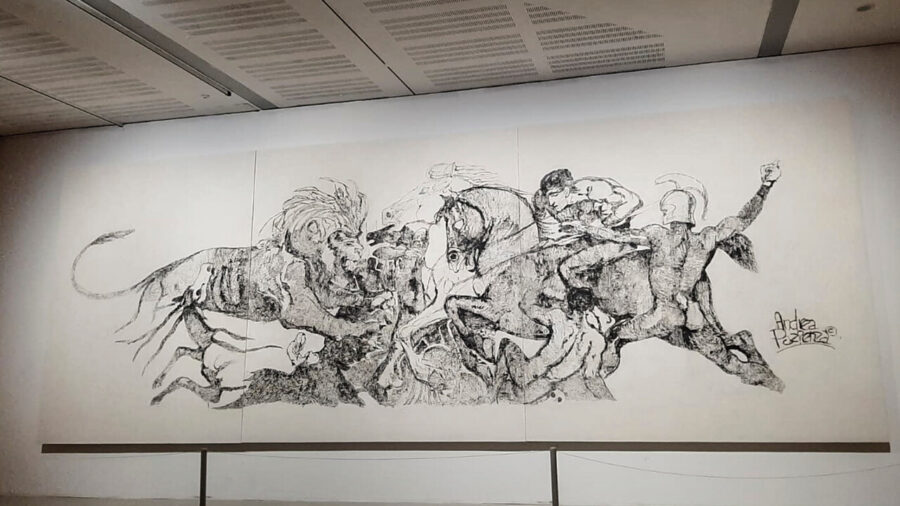
The sister of Italian cartoonist Andrea Pazienza has called for the relocation of a mural created by the artist to a museum. The artwork, which has been displayed at the Mostra d’Oltremare exhibition center in Naples for 40 years, is currently exposed to the elements, raising concerns about its long-term preservation.
Concerns Over Artwork Condition
Mariella Pazienza, the sister of the late cartoonist, stated that the mural cannot remain in its current outdoor location. She argued that the piece requires professional conservation and protection from environmental damage. She has formally requested that the Municipality of Naples intervene to secure the artwork and move it to a controlled environment.
The mural, a significant piece of the artist’s legacy, has been a fixture at the Mostra d’Oltremare since its creation four decades ago. The exhibition center, which hosts various cultural and commercial events, has served as the backdrop for the piece for most of its existence.
The Legacy of Andrea Pazienza
Andrea Pazienza was a prominent figure in the Italian comics scene, known for his distinct style and prolific output during the 1970s and 1980s. His work is often studied for its cultural impact on Italian graphic arts. The call to move the mural highlights a growing movement among the artist’s estate and supporters to ensure his public works are archived and properly maintained for future generations.
The Municipality of Naples has not yet issued a formal response regarding the request to relocate the mural or potential plans for its restoration. Supporters of the proposal suggest that transferring the work to a museum would allow for necessary restoration efforts and provide public access in a protected setting.
Why it matters: The preservation of public art is a recurring issue for cities with historic installations. This appeal highlights the tension between maintaining site-specific works and ensuring their survival against degradation, a concern relevant to cultural institutions globally, including those in the Middle East and Egypt, where outdoor heritage sites face similar environmental threats.