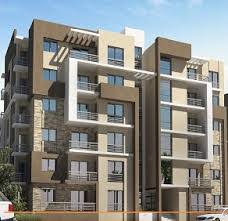
Egyptian Prime Minister Mostafa Madbouly announced on Oct. 24 that the government will launch a four‑year national housing programme to deliver about one million residential units, backed by an estimated EGP 1 trillion ($52 billion) in investments.
The scheme, unveiled at the close of Egypt Forum 2026, will be carried out in partnership with private developers. Forum recommendations also called for the Tahya Misr Fund to take part and for faster legislation to regulate the real‑estate market and define the rights and obligations of citizens, developers and the state.
The programme will span several categories, including social housing, middle‑income apartments, rental units, rent‑to‑own homes and accommodation for factory workers. Details on how many units will be allocated to each segment or the precise rollout schedule have not been released.
Focus on Rental and Rent‑to‑Own Options
During the forum’s urban‑development session on Oct. 20, President Abdel Fattah Al‑Sisi instructed the government to work with the Tahya Misr Fund to build 200,000 rental units, with costs split evenly between the two parties. It is not yet clear whether these units will be counted within the one‑million‑unit target.
Madbouly noted that Egypt has built or is constructing roughly two million housing units in recent years, many aimed at low‑ and middle‑income families. He highlighted rental housing as a growing share of the market in many developed economies and said expanding this segment would give young people, newlyweds and low‑savings households an alternative to immediate home purchase.
Separately, the government has opened applications for 25,000 units offered under rental and rent‑to‑own schemes, with the deadline set for Oct. 28. The allocation includes 15,000 units from the Social Housing and Mortgage Finance Fund’s “Sakan Likol El Masryeen 9” initiative and 10,000 units from the New Urban Communities Authority’s rent‑to‑own program. Of the latter, about 5,000 units are already completed and another 5,000 are slated for construction over the next three years across roughly 26 new cities.
 Egypt
 Saudi Arabia
 UAE
 Spain
 United Kingdom
 United States
 China
 India
