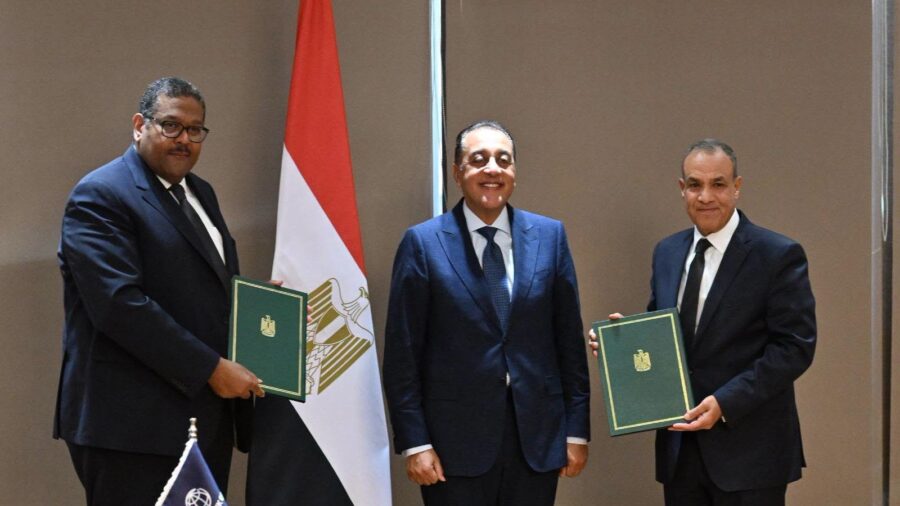
Egypt has finalized a $1 billion financing agreement with the World Bank to support the second phase of its economic reform program. The deal aims to bolster the nation’s resilience against external economic shocks and accelerate its green energy transition.
May 2026
The World Bank Group’s Board of Executive Directors formally approved the $1 billion funding package. This decision aligned with the existing strategic partnership framework established between Egypt and the international financial institution for the 2023–2027 period.
The Signing Ceremony
Prime Minister Mostafa Madbouly attended the official signing at the Ministry of Foreign Affairs headquarters in the New Administrative Capital. Foreign Minister Badr Abdelatty, acting as Egypt’s governor at the World Bank, signed the agreement alongside World Bank Regional Director Walid Al-Atbani. The initiative is titled “Building Resilience, Creating Opportunities and Enhancing Wealth for Egypt’s Prosperity and Stability.”
Reform Objectives
The funding supports a broad economic agenda focused on strengthening competitiveness and private sector investment. Key priorities include improving state-owned enterprise governance, reducing government borrowing costs, and removing barriers to growth. The program also seeks to expand the Takaful and Karama social protection initiatives and improve the financial sustainability of the electricity and water sectors. Additionally, it targets environmental goals, such as carbon market development and greenhouse gas emission monitoring.
Current Status
The agreement integrates Egypt’s long-term development goals, specifically the State Ownership Policy, the government’s privatization program, Egypt Vision 2030, and the National Climate Change Strategy 2050.
Why it matters: This funding serves as a critical pillar for Egypt’s ongoing economic stabilization efforts. By linking financial support to institutional reforms and climate-focused initiatives, the World Bank aims to help the nation navigate current economic pressures while advancing its long-term privatization and sustainability targets.
 Egypt
 Saudi Arabia
 UAE
 Spain
 United Kingdom
 United States
 China
 India
